
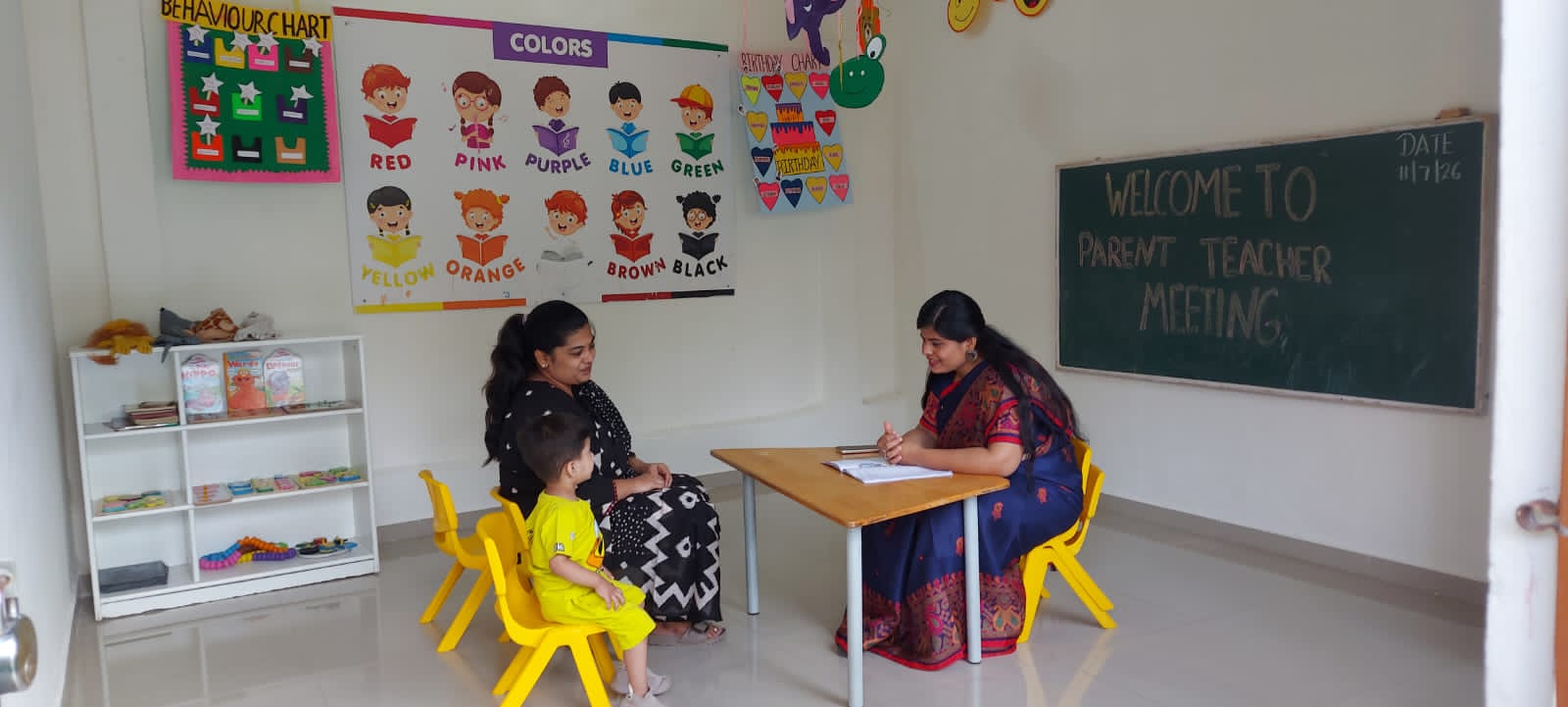
Wondering when to Start Preschool? Learn the right age, admission timeline, readiness signs and practical preschool planning tips for parents. Choosing a preschool is one of those parenting decisions that can feel simple at first and surprisingly confusing once you actually start looking. Parents often wonder whether they are starting too early, waiting too long, or choosing the right time for their child’s needs.
The truth is, there is no single month or birthday when every child should begin preschool. Age matters, but so do communication skills, independence, comfort around other children, family routines, and the child’s readiness for a new environment.
Table of Contents
For families planning preschool admission in Wakad, understanding the process early can make the decision much calmer. Instead of rushing when admissions open, parents can spend time visiting schools, asking meaningful questions, observing classrooms and thinking about what kind of environment would suit their child.
So, when to start preschool planning? Ideally, parents should begin exploring options several months before they expect their child to join. This gives the family enough time to understand the right age for preschool, compare programmes and prepare the child emotionally and practically.
What Is the Right Age for Preschool?
The appropriate preschool age can vary depending on the programme and the individual child. Many children begin some form of preschool between around 2 and 4 years of age, while others start later depending on family circumstances and readiness.
Rather than focusing only on the number of years a child has completed, parents can look at everyday behaviours.
For example, a child may be showing signs of readiness if they:
- Can communicate basic needs through words, gestures or expressions
- Show curiosity about other children
- Can spend some time away from parents or primary caregivers
- Are beginning to follow simple instructions
- Can participate in short activities
- Show interest in stories, songs, drawing or play
- Are developing basic self-help skills
- Can gradually adjust to a simple daily routine
These signs do not need to be perfect. Preschool is also a place where children develop many of these abilities.
The preschool admission age should therefore be considered alongside the child’s overall development rather than treated as the only deciding factor.
When Should Parents Actually Start Looking?
A useful approach is to start researching preschools approximately 6 to 9 months before the intended joining date.
This does not mean parents need to apply immediately. The first stage can simply be research.
For example, if you want your child to start preschool around June, you could begin exploring options around September or October of the previous year.
This gives you time to:
- Make a list of nearby preschools.
- Visit their websites and understand their programmes.
- Check age requirements and admission processes.
- Visit shortlisted schools.
- Speak with teachers or administrators.
- Observe the learning environment.
- Compare daily schedules and activities.
- Understand transportation and daycare requirements.
- Discuss your child’s individual needs.
- Complete admission formalities without last-minute pressure.
Starting early is particularly helpful for parents who need both preschool and daycare because the daily schedule and care arrangements may require more planning.
A Practical Preschool Planning Timeline
9–12 Months Before Admission: Start Exploring
At this stage, there is no need to make a final decision.
Start by asking yourself basic questions:
- What age will my child be when they join?
- Do we need only preschool or preschool plus daycare?
- How far should the school be from home?
- What kind of daily routine would work for our family?
- Does my child enjoy group activities?
- Are there specific developmental or learning needs we should discuss?
Create a shortlist of schools that are convenient and appear suitable.
For families in and around Wakad, proximity can be an important practical consideration. A preschool that fits comfortably into the family’s daily travel routine can make mornings and evenings easier for both parents and children.
6–9 Months Before Admission: Visit and Compare
Once you have a shortlist, visit the schools rather than relying entirely on online information.
Pay attention to the atmosphere when you enter.
Do teachers speak patiently with children? Are children encouraged to ask questions? Does the classroom feel organised without being overly restrictive? Are activities age-appropriate?
Parents can also ask about:
- Teacher-child interaction
- Class size
- Daily routine
- Play-based activities
- Outdoor time
- Communication with parents
- Safety procedures
- Hygiene practices
- Meals and snacks, if provided
- Daycare timings, if required
- Pick-up and drop-off arrangements
- How the school handles separation anxiety
A good visit should leave you with a clearer understanding of how your child may experience the day, not just what facilities the preschool has.
Start Preschool 3–6 Months Before Admission: Think About Your Child’s Readiness
Once you have shortlisted a preschool, start preparing your child gradually.
There is no need to suddenly introduce a strict school routine.
Instead, build small habits into everyday life.
You can practise:
- Waking up and getting ready at a consistent time
- Eating meals around regular times
- Putting toys away after play
- Washing hands independently
- Carrying a small bag
- Listening to short instructions
- Saying goodbye to parents for short periods
- Playing alongside other children
- Talking about what happens at school
You can also talk positively about preschool without creating unrealistic expectations.
Instead of saying, “You will never cry at school,” try saying, “It may feel different at first, but your teacher will help you.”
That gives children permission to have normal emotions while still building confidence.
1–3 Months Before Preschool Starts: Finalise the Routine
By this stage, the major decision should ideally be complete.
Now the focus can move towards practical preparation.
Check the school’s required documents, uniforms, bags, stationery and other essentials. If transport is involved, explain the routine to your child in simple language.
You can also begin adjusting sleep and wake-up times gradually.
Avoid making too many changes at once. If your child is also going through another major transition at home, allowing some flexibility can make the preschool transition easier.
This is also a good time to discuss any developmental concerns with the appropriate professionals or the preschool team. Parents who want additional information about developmental support can explore child developmental therapy as part of their planning.
What If My Child Is Not Ready Start Preschool at the Expected Age?
This is one of the most common concerns parents have.
A child who is shy, slow to warm up, still developing communication skills or strongly attached to a parent is not automatically “behind” or unsuitable for preschool.
Children develop at different speeds.
Instead of comparing your child with another child of the same age, look at their individual progress.
You can discuss your observations with the preschool and, when appropriate, with a qualified child development professional. The goal is not to force a child into a particular timeline. It is to understand what support and environment may help them participate comfortably.
For some children, a gradual transition may work better than starting with a long day immediately.
Should Parents Choose Preschool or Daycare First Start Preschool?
For working parents, preschool and daycare planning often overlap.
Preschool generally focuses on early learning, social interaction, play and development, while daycare may provide extended care around the family’s working schedule.
If your child needs both, ask whether the two services are coordinated and how the transition works during the day.
A useful question is not simply, “Do you have daycare?”
Ask:
“What does my child’s complete day look like from arrival to pickup?”
That answer can tell you much more about whether the arrangement will work for your family.
Questions Parents Should Ask Before Admission
Before making a final decision, consider asking:
About learning
- What does a typical day look like?
- How much of the day involves play?
- How are activities adapted for different children?
- How do teachers encourage communication and independence?
About emotional adjustment
- How do you handle separation anxiety?
- Can parents receive updates during the initial transition?
- What happens if a child refuses to participate?
About practical matters
- What are the preschool timings?
- Is daycare available?
- What happens if a child becomes unwell?
- What are the pickup and transportation procedures?
About development
- How do teachers communicate developmental observations with parents?
- What happens if teachers notice that a child may need additional support?
These questions can help parents move beyond fees, facilities and admission dates and understand the actual experience their child is likely to have.
Why Starting Early Can Make Preschool Decisions Easier
Starting your search early does not mean deciding early.
It simply gives you room to think.
Parents who wait until the last few weeks may feel pressured to choose based on availability, distance or convenience alone. Starting earlier allows you to visit different environments, understand admission requirements and consider what genuinely suits your child.
For families considering Best Kiddonia Preschool and daycare centres Wakad in Pune, the same principle applies: look beyond the admission age and consider the child’s overall experience, daily routine, learning environment and individual needs.
The best choice is not necessarily the preschool with the longest list of facilities. It is the one where the environment, routine and approach make sense for your child’s current stage and your family’s practical needs.
A Calm Start Begins With Good Planning
Preschool does not have to be a rushed decision.
Start by understanding your child’s stage, then research the options available to your family. Visit schools, ask practical questions, observe how teachers interact with children and think about what your child’s everyday experience will look like.
For parents considering Best Kiddonia Preschool and daycare centres Wakad in Pune, beginning the conversation several months before the intended start date can give your family more time to make a thoughtful decision.
The most important question is not simply, “Is my child old enough?”
It is:
“Is this environment a good next step for my child right now?”
When parents approach preschool planning with that question in mind, the process becomes less about meeting a deadline and more about finding a comfortable, supportive beginning to their child’s early learning journey.
Frequently Asked Questions
What is the right age for preschool?
There is no universal age that works for every child. Many children begin preschool between approximately 2 and 4 years, depending on the programme, family circumstances and individual readiness.
When should I start looking for a preschool?
Starting research around 6 to 9 months before the intended joining date is a practical approach. It gives parents enough time to compare schools, visit classrooms and complete admission requirements without unnecessary pressure.
Is my child too young for preschool?
Age is only one consideration. Look at communication, independence, social interest, ability to participate in simple activities and comfort with short periods away from parents. Discuss concerns with the preschool and an appropriate professional when needed.
What if my child cries after starting preschool?
Some children need time to adjust to a new environment. Separation anxiety can be part of the transition. A consistent routine, calm communication and supportive teachers can help children gradually become more comfortable.
Should I choose preschool based only on admission age?
No. Admission age is useful for understanding eligibility, but parents should also consider the child’s development, classroom environment, teacher interaction, daily routine, safety practices and the family’s practical requirements.
How early should I apply for preschool admission?
This depends on the preschool and its admission cycle. It is sensible to research early and ask shortlisted schools when applications open, rather than waiting until your preferred joining month.