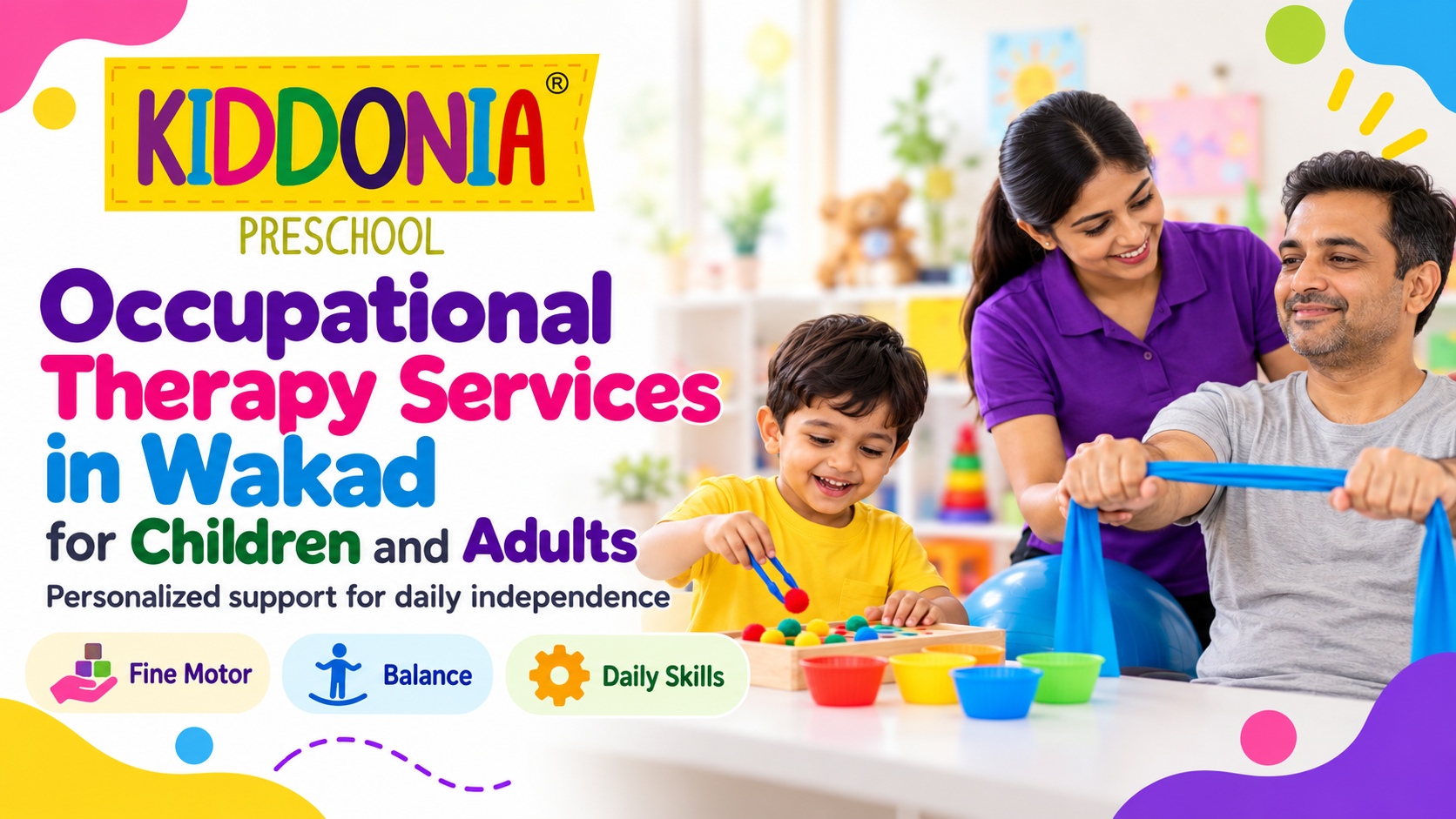
Explore occupational therapy services in Wakad for children and adults, including support for motor skills, sensory needs, self-care and daily activities. Occupational therapy is not only about treating an injury or helping someone recover after an illness. It can also support children who find everyday activities difficult and adults who need help becoming more independent in their routines.
For families searching for occupational therapy services in Wakad, one of the first questions is usually simple: How can therapy help in everyday life?
Table of Contents
The answer depends on the person’s individual needs. For a child, occupational therapy may focus on activities such as holding a pencil, using scissors, managing sensory experiences, getting dressed or participating comfortably in classroom activities. For an adult, therapy may focus on daily tasks, coordination, hand function, mobility-related activities or adapting to changes after an injury or health condition.
The purpose is practical. Therapy works toward helping a person participate more comfortably and independently in activities that matter in everyday life.
What Is Occupational Therapy?
Occupational therapy helps people develop, regain or adapt the skills needed for everyday activities.
The word “occupation” in occupational therapy does not simply refer to employment. It includes the meaningful activities people do as part of daily life, such as learning, playing, working, getting dressed, eating, writing, communicating, preparing food and taking care of themselves.
Therapy is generally based on an individual’s abilities, difficulties and goals. The activities used during sessions may therefore look different from person to person.
For children, therapy can involve play-based activities. For adults, it may involve functional exercises or practical strategies related to daily routines.
Occupational Therapy for Children
Children develop skills at different rates. Some may need additional support with movement, coordination, sensory processing, attention or everyday activities.
Occupational therapy can be considered when difficulties are affecting a child’s participation at home, school or in social situations.
Depending on the child’s needs, therapy may work on areas such as:
- Fine motor skills
- Hand-eye coordination
- Pencil and crayon control
- Cutting and drawing
- Dressing and other self-care skills
- Sitting and participating in activities
- Sensory processing
- Body awareness
- Motor planning
- Attention during age-appropriate tasks
- Functional play skills
The focus should not be on making every child perform in exactly the same way. A therapist may instead identify where a child is finding an activity difficult and work on the underlying skills through suitable activities.

How Occupational Therapy Can Support Preschool Children
The connection between occupational therapy and preschool is important because many early learning activities involve motor, sensory and social skills.
A child attending a preschool in Wakad may be expected to participate in activities such as colouring, drawing, building blocks, puzzles, story sessions, group games and simple self-care routines.
A child who struggles with these activities may become frustrated or avoid participating.
For example, a child may understand what a teacher is asking but have difficulty holding a pencil comfortably. Another child may find certain sounds, textures or crowded environments overwhelming. Someone else may struggle to coordinate both hands during an activity.
Occupational therapy can help identify the specific difficulty and work toward functional skills that support participation.
This does not mean that every child who finds an activity difficult needs therapy. Children’s development varies, and parents should discuss persistent concerns with an appropriately qualified professional.
Fine Motor Skills and Early Learning
Fine motor skills involve the controlled use of smaller muscles, particularly in the hands and fingers.
Children use these skills throughout their preschool years. Holding crayons, turning pages, using classroom materials, opening containers and manipulating small objects all involve hand coordination.
Activities that encourage fine motor development can include:
- Drawing and colouring
- Building with blocks
- Simple puzzles
- Threading activities
- Play dough
- Paper activities
- Peg or clip activities
- Age-appropriate craft work
The objective is not simply to make a child write earlier. Stronger hand skills can support many everyday activities and make classroom participation easier.
This is one reason parents comparing the Best Preschool in Wakad may want to look at how the learning environment encourages movement, play and hands-on activities alongside early academics.
Sensory Processing and Everyday Participation
Some children may react strongly to sounds, touch, movement, light or other sensory experiences. Others may appear to seek movement constantly or have difficulty noticing certain sensory information.
Sensory differences can sometimes affect a child’s ability to participate in everyday activities.
A child may, for example, become uncomfortable in a noisy classroom, avoid certain textures during play or find it difficult to remain engaged during table activities.
An occupational therapist can assess the child’s functional difficulties and determine whether sensory-based strategies may be appropriate.
Parents should avoid assuming that every unusual behaviour is a sensory issue. Understanding the child’s overall development and environment is important before deciding what type of support may be useful.
Occupational Therapy for Adults
Occupational therapy can also be valuable for adults.
An adult may need therapy after an injury, surgery, neurological condition or other change that affects everyday function. The specific goals depend on the individual’s situation.
Therapy may support activities involving:
- Hand and upper-limb function
- Coordination
- Daily self-care
- Work-related activities
- Functional movement
- Home activities
- Adapting to physical limitations
- Returning to meaningful routines
For someone recovering from an injury, the goal may not simply be improving strength. The more useful question may be: Can the person use that ability during an activity they need to perform every day?
That practical approach is an important part of occupational therapy.
When Should Parents Consider an Evaluation?
Parents often notice small difficulties before knowing whether professional support is needed.
Consider discussing your concerns with a qualified professional if a child consistently struggles with everyday activities compared with what would be expected for their developmental stage, particularly when the difficulty affects participation at home or in school.
Examples may include persistent difficulty with:
- Using hands for age-appropriate activities
- Managing basic self-care tasks
- Participating in classroom activities
- Coordinating movements
- Tolerating certain sensory experiences
- Following through with everyday routines
- Using both hands together
- Performing tasks that require motor planning
An evaluation does not automatically mean that a child will require long-term therapy. It can simply provide a clearer understanding of the concern and whether support would be useful.
Choosing the Right Therapy Environment in Wakad
When looking for occupational therapy in Wakad, parents and adults should look beyond location alone.
A few practical questions can help:
Is the therapist appropriately qualified?
Ask about the therapist’s professional qualifications and experience with the specific type of concern.
Is the approach individualised?
Two people with the same broad diagnosis may have very different functional difficulties. Therapy should therefore consider the person’s individual needs and goals.
Are parents involved when working with children?
Parents can provide useful information about what happens at home and may also need practical strategies for supporting everyday routines.
Are goals functional?
Ask what skills the therapy is working toward and how those skills relate to daily activities.
Is progress reviewed?
Children and adults can change over time. Reviewing goals periodically helps determine whether the therapy approach continues to be appropriate.
Preschool, Daycare and Therapy: What Parents Should Know
Parents searching for Early Childhood Education in Wakad or a Daycare in Wakad may also be thinking about developmental support.
Preschool and daycare have a different role from occupational therapy. A preschool provides an early learning environment, while daycare primarily provides care during extended hours. Occupational therapy is a professional intervention focused on specific functional needs.
They can, however, exist alongside one another.
For example, a child may attend preschool during the day and receive therapy separately if a qualified professional recommends it. With appropriate communication and consent, parents may share relevant information with educators so that the child’s everyday environment is understood more clearly.
Families considering the Preschool and Daycare in Wakad options should therefore assess the child’s overall routine rather than expecting a preschool or daycare to provide therapy services.
What Can Parents Do at Home?
Small everyday activities can give children opportunities to practise skills without turning the home into a therapy room.
Depending on the child’s age and abilities, parents can encourage activities such as:
- Drawing and colouring
- Building blocks
- Simple household tasks
- Turning pages while reading
- Playing with age-appropriate puzzles
- Opening and closing child-safe containers
- Dressing practice
- Outdoor movement and play
The activity should remain enjoyable and appropriate for the child. If a therapist has provided a home programme, parents should follow those recommendations rather than introducing exercises based on online advice.
For adults, therapists may similarly recommend practical ways to practise relevant activities within the home or work environment.
Finding the Right Support for Your Family
Searching for the Best Preschool in Pune and searching for occupational therapy are two different decisions, even though both can relate to a child’s development.
A preschool should provide an age-appropriate learning and social environment. Therapy should address specific functional concerns identified through professional assessment.
For families in and around Wakad, accessibility is also worth considering. Regular appointments can become part of a family’s routine, so practical factors such as travel time, appointment schedules, communication and the therapist’s experience may all matter.
A local provider such as Trice may be one of the options a family comes across while researching developmental and therapy-related support. The right choice should ultimately depend on the individual’s needs, professional guidance and comfort with the therapy process.
Final Thoughts
Occupational therapy is most useful when it connects therapy with real life.
For a child, that might mean participating more comfortably in classroom activities, developing hand skills for drawing or learning greater independence with daily routines. For an adult, it may mean returning to an important activity, adapting to a physical limitation or becoming more independent at home or work.
If you are exploring occupational therapy services in Wakad, start by identifying the specific difficulty rather than choosing a service based only on a broad label. A professional assessment can help clarify what support may be appropriate.
And when considering preschool or daycare for a young child, remember that early education and therapy have different roles. A supportive preschool environment can encourage learning and development, while occupational therapy can provide targeted help when a child has specific functional challenges.
FAQs
What does an occupational therapist do for a child?
An occupational therapist may help a child develop or improve functional skills related to movement, hand use, sensory processing, self-care, coordination, play and participation in everyday activities.
Can occupational therapy help preschool children?
It can be appropriate for children who have specific difficulties affecting everyday participation. An evaluation can help determine whether occupational therapy is suitable for the individual child.
Is occupational therapy only for children with developmental concerns?
No. Occupational therapy can support people across different ages and circumstances, including adults who need help with daily activities following an injury, illness or functional change.
How long does occupational therapy take?
There is no single duration that applies to everyone. It depends on the person’s needs, goals, progress and professional recommendations.
Should parents choose preschool and therapy together?
Preschool and occupational therapy serve different purposes. Parents should first understand the child’s needs and then choose appropriate educational and therapeutic support accordingly.
What should I ask before starting occupational therapy?
Ask about the therapist’s qualifications, experience, assessment process, therapy goals, expected involvement from parents and how progress will be reviewed.