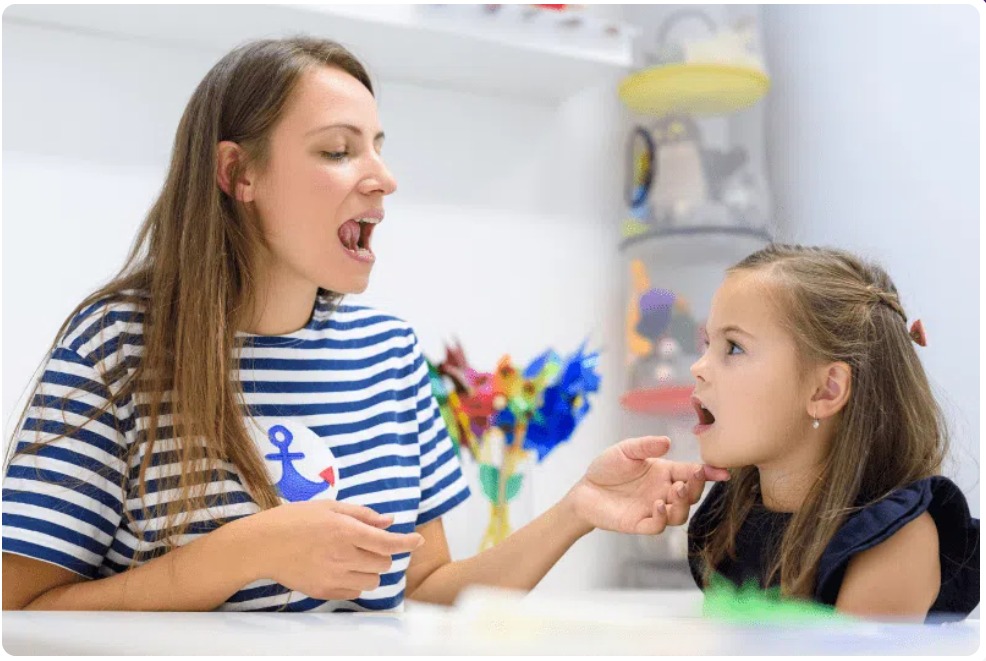
Child Speech Development: When Should Parents Seek Support?
“Why isn’t my child talking as much as other children?”
It is a question many parents quietly worry about.
You may notice that another child of the same age is using more words, while your child mostly points, gestures or uses a few familiar words. Or perhaps your child understands what you say but does not seem interested in talking.
Table of Contents
It is natural to wonder whether you should wait, encourage more talking at home or speak with someone for advice.
The important thing to remember is that children do not all develop language at exactly the same pace. Some children are naturally quieter, while others talk constantly. At the same time, persistent concerns about communication should not simply be ignored.
Understanding child speech development can help parents know what to observe and when it may be useful to seek additional guidance.
What Does Speech and Language Development Include?
When parents say, “My child does not talk much,” they are usually thinking about the number of words their child uses.
But communication involves much more than vocabulary.
A child’s communication development can include:
- Understanding what other people say
- Using sounds, words or gestures
- Pointing to communicate
- Responding when someone speaks to them
- Looking towards people during interaction
- Following simple instructions
- Showing interest in conversations
- Combining words as language develops
- Expressing needs and feelings
- Using communication during play
This means it is useful to look at the complete picture rather than counting words alone.
For example, a child who uses relatively few words but understands simple instructions, points to things they want and actively tries to communicate is showing different communication behaviours from a child who rarely responds to communication at all.
Is Every Late Talking Child Experiencing a Speech Delay?
Not necessarily.
Some children begin speaking later and gradually catch up. Others may need additional support with language or communication.
The phrase late talking child describes a situation parents may notice, but it does not by itself tell you why a child is talking less.
There can be many reasons for differences in communication development, including individual developmental variation and difficulties that may require professional assessment.
That is why parents should avoid diagnosing the reason themselves based only on online checklists or comparisons with other children.
Instead, observe your child’s communication and discuss persistent concerns with an appropriate professional.
Signs Parents Can Pay Attention To
There is no single behaviour that can tell a parent whether a child has a speech or language difficulty.
However, some observations may be worth discussing with a paediatrician, speech-language professional or child development specialist.
Parents may want to seek advice if a child:
- Uses very few words compared with what they previously used
- Rarely tries to communicate needs
- Does not seem to understand simple everyday language
- Rarely responds when spoken to
- Has difficulty following simple instructions
- Relies almost entirely on gestures without developing spoken communication
- Is difficult for familiar caregivers to understand as speech develops
- Does not appear to be making progress over time
- Loses words or communication skills they previously had
A single observation does not necessarily indicate a problem.
What matters is the overall pattern and progress over time.
What About a Child Who Understands Everything but Does Not Talk Much?
Parents sometimes say:
“My child understands everything. They just don’t speak much.”
Understanding language and expressing language are related but different abilities.
A child may understand considerably more than they can say.
For example, they may understand:
“Bring your shoes.”
but respond with a gesture rather than words.
This can be useful information to share with a professional if you are concerned about your child’s communication.
Instead of focusing only on what your child cannot say, observe what they can understand, how they communicate and whether those abilities are changing over time.
How Can Parents Encourage Communication at Home?
You do not need to turn your home into a classroom.
Some of the best opportunities for language development happen during ordinary activities.
Talk about what your child is doing
If your child is playing with a car, you could say:
“The car is going fast.”
“The red car is under the table.”
Short, meaningful sentences give your child language connected to something they can see.
Follow your child’s interests
If your child loves animals, talk about animals.
If they enjoy cooking pretend games, talk about food, plates and actions.
Children are often more engaged when communication is connected to something they already enjoy.
Give your child time to respond
Parents sometimes ask a question and immediately answer it themselves.
Instead, pause.
Give your child a few seconds to respond through words, sounds, gestures or facial expressions.
Communication takes turns.
Expand what your child says
If your child says:
“Ball.”
You might respond:
“Yes, a big ball!”
You are modelling additional language without forcing your child to repeat it.
Read together
You do not have to finish an entire story every time.
Point to pictures, name objects and talk about what is happening.
“Look, the dog is running.”
“Where is the cat?”
Let your child point or respond in whatever way they can.
Avoid Turning Every Moment Into a Speaking Test
When parents are worried, it can be tempting to ask the same questions repeatedly:
“Say apple.”
“What colour is this?”
“Tell me the name.”
“What is that?”
A little practice is fine, but constant testing can make communication feel like work.
Instead, create natural reasons to communicate.
If your child wants bubbles, you might hold the container and wait briefly for them to indicate what they want.
If they point towards water, you can model:
“Water. You want water.”
The goal is to encourage communication, not pressure a child into performing.
How Preschool Can Support Communication
Preschool provides children with many opportunities to communicate.
Children hear teachers speaking, listen to stories, participate in songs, interact with classmates and use language during play.
These experiences can support preschool communication skills because communication becomes part of everyday activities.
However, preschool should not be treated as a replacement for professional assessment or therapy when a child has ongoing developmental concerns.
Teachers can share useful observations with parents because they see the child interacting in a group environment.
For example, a teacher may notice that a child communicates differently during individual interaction compared with group activities.
That information can help parents understand the bigger picture.
When Should Parents Seek Extra Support?
Parents do not need to wait until a child reaches a particular age if they have genuine concerns.
A good starting point can be discussing the concern with your child’s paediatrician or a qualified speech-language or child development professional.
Professional guidance can help determine whether a child’s communication pattern falls within expected variation or whether a more detailed assessment may be useful.
This is particularly important if you notice speech delay signs together with concerns about understanding language, interaction, social communication or loss of previously acquired skills.
The purpose of seeking help is not to put a label on your child.
It is to understand what is happening and identify appropriate support if it is needed.
Parents looking for additional developmental guidance can also learn more about child developmental therapy and the types of support that may be available.
What If My Child Talks More at Home Than at Preschool?
This can happen.
Some children are comfortable talking with parents but become quiet around unfamiliar adults or groups.
Others may communicate more during one-to-one interaction than in a classroom.
Before assuming that the child is simply “not talking,” ask the teacher about what they observe.
Useful questions include:
- Does my child respond when spoken to?
- Do they communicate through gestures?
- Do they interact with other children?
- Do they participate in songs or stories?
- Do they try to communicate their needs?
- Have you noticed any changes over time?
These observations can provide useful context.
Bilingual Children and Language Development
Families who use two or more languages at home sometimes worry that bilingualism is causing a child to talk less.
Growing up with multiple languages does not mean parents need to stop using their home language simply because a child is learning another language.
If you have concerns about your child’s language development, explain to the professional which languages your child hears and uses and how often.
Looking at communication across the child’s languages gives a more complete picture than focusing on only one language.
What Parents Should Avoid
When worried about speech development, parents often receive advice from relatives, friends and social media.
Be careful with advice that says:
“Just wait. They’ll talk when they’re ready.”
Waiting may sometimes be appropriate, but persistent concerns deserve discussion.
Also avoid:
- Comparing your child constantly with other children
- Forcing your child to repeat words
- Shaming them for unclear speech
- Assuming you know the cause without assessment
- Stopping your home language because of fear that it is confusing the child
- Treating online developmental checklists as a diagnosis
Your observations are valuable, but professional assessment is different from self-diagnosis.
A Simple Communication Observation Checklist
Instead of counting words obsessively, parents can observe these areas over several weeks:
| Area | What to Observe |
|---|---|
| Understanding | Does your child understand familiar instructions? |
| Expression | How does your child communicate wants and needs? |
| Interaction | Do they respond to people? |
| Gestures | Do they point, wave or use gestures? |
| Words | Are new words gradually appearing? |
| Combining words | Are they beginning to put words together? |
| Play | Do they communicate during play? |
| Progress | Are communication skills changing over time? |
| Regression | Have previously used communication skills disappeared? |
This is not a diagnostic checklist.
It is simply a way to organise your observations before discussing them with a professional.
Early Support Is About Understanding, Not Labelling
When a child does not talk as much as expected, it is easy to become anxious.
But the answer is not to compare them with every child around them or spend every day counting words.
Look at the whole picture.
How does your child understand language? How do they communicate their needs? Do they respond to people? Are they trying to interact? Are new communication skills appearing over time?
If something continues to concern you, asking for professional guidance is a reasonable step. You do not have to wait until you are completely certain that something is wrong.
For families connected with Best Kiddonia Preschool and daycare centres Wakad in Pune, communication between parents, teachers and appropriate child development professionals can help create a clearer understanding of a child’s needs.
Every child has their own personality and pace of development. The goal is not to make every child communicate in exactly the same way or at exactly the same time.
It is to notice their progress, respond to their needs and give them the right opportunities and support to communicate with confidence.
FAQs
When should parents worry if a child is not talking?
There is no single point at which every parent should worry. However, persistent concerns, limited progress, difficulty understanding language or loss of previously acquired communication skills are reasons to seek professional advice.
Is late talking always a speech delay?
No. Some children who talk later catch up, while others may need support. An appropriate professional assessment can help distinguish developmental variation from a potential communication difficulty.
How can I help my child talk more at home?
Talk about everyday activities, follow your child’s interests, read together, give them time to respond and expand on the words they use. Keep communication natural rather than turning every interaction into a test.
Should I correct my child’s pronunciation?
Avoid repeatedly correcting or criticising young children. Instead, model the correct word naturally. If speech is consistently difficult to understand or you have concerns, discuss them with a qualified professional.
Can preschool help a child with communication?
A supportive preschool can provide opportunities for conversation, songs, stories, play and interaction. However, if there are ongoing concerns about speech or language development, preschool activities should not replace professional assessment or recommended support.
Should bilingual parents speak only one language with their child?
Parents do not generally need to abandon their home language simply because a child is learning another language. If you are concerned about language development, tell the professional about all the languages your child uses or hears.