Every child has their own way of learning, expressing emotions and connecting with the people around them. Some children begin talking early and quickly build sentences, while others take more time to find the words they need.
When a child has ongoing difficulty with speaking, understanding language or communicating with others, parents may start looking for professional support. Speech therapy can provide children with a structured yet supportive environment where they can work on communication skills through activities suited to their age and abilities.
Table of Contents
For families searching for speech therapy in Wakad, the goal should not simply be getting a child to speak more. It is about helping the child communicate more comfortably and effectively in everyday situations, whether at home, in a classroom or while playing with other children.
What Is Speech Therapy for Children?
Speech therapy is a form of professional support that addresses difficulties related to speech, language and communication.
A speech-language professional may work with children on areas such as:
- Understanding spoken language
- Using words and sentences
- Pronouncing speech sounds
- Building vocabulary
- Answering questions
- Following instructions
- Expressing needs and feelings
- Conversational skills
- Social communication
- Fluency or voice-related concerns
The exact approach depends on the child. A toddler who uses very few words may need a different approach from a school-aged child who speaks but has difficulty being understood.
This is why understanding the individual child’s communication profile is important before deciding what kind of therapy may be appropriate.

Why Early Communication Support Can Matter
Communication affects many parts of a child’s daily life.
A child uses communication to ask for something, respond to a parent, participate in play, follow instructions and build relationships with others. When communication is difficult, everyday situations can sometimes become frustrating.
Early support may help children develop practical communication skills while they are still building their understanding of language and social interaction.
The purpose is not to compare one child with another. Children develop at different rates. Professional guidance can simply help parents understand whether a child’s communication pattern is within the expected range or whether further assessment could be useful.
Signs Parents May Want to Discuss With a Professional
Parents are often the first people to notice changes or differences in their child’s communication.
Some signs that may be worth discussing with a qualified professional include:
- Limited use of words for the child’s developmental stage
- Difficulty combining words
- Difficulty understanding simple instructions
- Trouble expressing basic needs
- Speech that is difficult for familiar people to understand
- Difficulty answering simple questions
- Limited back-and-forth interaction
- Frequent frustration when trying to communicate
- Difficulty participating in age-appropriate conversations
- Loss of communication skills that were previously present
These signs do not automatically mean that a child needs speech therapy. Development is individual, and many factors can influence communication.
An assessment can help parents understand what is happening rather than relying on assumptions or comparisons.
What Happens During a Speech Therapy Session?
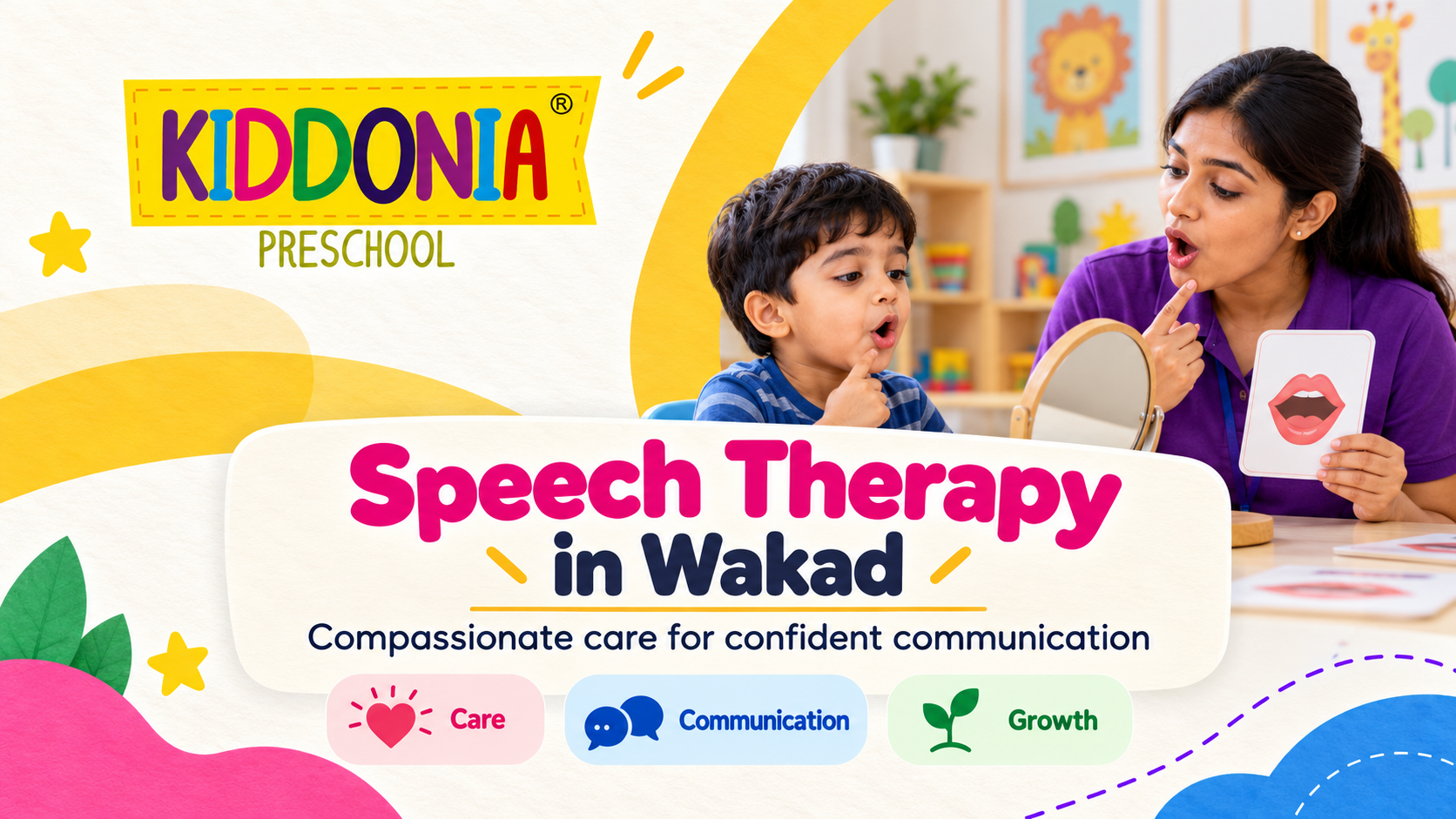
Parents sometimes imagine speech therapy as a child sitting at a table and repeating words for an entire session. For young children, it can look very different.
Therapy may involve toys, picture books, pretend play, songs, games and everyday objects.
For example, a therapist may use a toy kitchen to encourage a child to name food items, request objects or describe actions. A picture book can create opportunities to identify objects, answer questions and build vocabulary.
The activities may look simple, but they can be planned around specific communication goals.
A child may also be encouraged to take turns, listen, respond or use words during play.
This play-based approach can make therapy more comfortable for young children while giving them repeated opportunities to practise communication.
Building Communication Through Everyday Activities
Speech development does not happen only during therapy sessions.
Parents can create communication opportunities throughout the day.
During meals
Talk about food, colours, tastes and actions. Give the child opportunities to request what they want rather than anticipating every need.
During play
Follow the child’s interests. If they are playing with cars, talk about the car, its colour, movement and where it is going.
During reading
Ask simple questions about pictures and allow the child to point, gesture or answer in their own way.
During daily routines
Getting dressed, bathing, shopping and travelling can all become opportunities to introduce and practise useful language.
The objective is not to turn every activity into a lesson. Natural conversation and interaction can provide valuable practice without putting pressure on the child.
Speech Therapy and Preschool Readiness
Communication becomes especially important when children begin participating in group learning environments.
Parents looking for a Best Preschool in Pune may consider teaching methods, facilities, activities and safety. Communication should also be part of the conversation.
A child entering preschool may need to:
- Follow simple instructions
- Ask for help
- Communicate basic needs
- Listen to stories
- Participate in group activities
- Respond to teachers
- Interact with classmates
- Take turns during play
Children do not need perfect speech before starting preschool. However, understanding how a child communicates can help parents and educators provide appropriate support.
If a child is already receiving speech therapy, parents can discuss relevant needs with the preschool when appropriate.
Choosing a Preschool in Wakad for a Child Receiving Speech Support
A preschool and a speech therapy centre have different roles.
A preschool provides an early learning and social environment, while speech therapy focuses on specific communication needs.
When comparing a Preschool in Wakad, parents can observe how teachers communicate with children.
Consider asking:
- Do teachers give children enough time to respond?
- Are storytelling and songs part of the routine?
- Do children have opportunities for group interaction?
- How does the school respond when a child has difficulty communicating?
- How are parents informed about the child’s adjustment?
- Are activities suitable for different developmental levels?
The aim is not to find a school where every child communicates in exactly the same way. A supportive environment should allow children to participate while developing their skills.
The Role of Play in Language Development
Play is one of the most natural ways young children learn.
During pretend play, children can practise vocabulary, simple sentences, turn-taking and social interaction.
A pretend grocery shop, for example, can involve naming foods, asking for items and using simple conversational exchanges.
Building blocks can introduce words such as “big,” “small,” “up,” “down” and “more.” A toy animal set can create opportunities to talk about names, sounds, actions and locations.
For this reason, parents searching for a Play School in Wakad can look at whether children have enough opportunities for imaginative and interactive play.
Play does not replace professional therapy, but it can provide valuable everyday opportunities for communication.
Supporting Children Through Early Childhood Education
Early Childhood Education in Wakad can give children many opportunities to listen, communicate and interact.
Story sessions, music, group games, art activities and classroom routines can all create natural communication situations.
A child may learn to ask a teacher for a colour, tell another child what they are building or answer a question during story time.
For children receiving speech therapy, these everyday environments can provide additional opportunities to use skills outside the therapy setting.
Parents can help by keeping communication between home, school and therapy as consistent as reasonably possible.
What Parents Should Look for in a Speech Therapy Provider
Choosing a speech therapist is an important decision. A few practical questions can help parents evaluate their options.
Professional qualifications
Ask about the therapist’s qualifications and experience working with children.
Assessment process
Understand how the child’s communication skills will be evaluated before therapy goals are decided.
Individual goals
Therapy should be based on the child’s specific communication needs rather than a generic programme.
Parent involvement
Ask whether parents will receive suggestions for supporting communication at home.
Progress monitoring
Find out how progress will be reviewed and how therapy goals may change over time.
Child-friendly interaction
Young children may need time to become comfortable. A calm and supportive approach can make it easier for them to participate.
Speech Therapy and Daycare
Families searching for Preschool and Daycare in Wakad may also want to consider how communication is encouraged during extended care hours.
Daycare routines can provide natural opportunities for language development. Snack time, play, group activities and simple conversations can all support communication.
However, daycare should not be considered a replacement for speech therapy when professional intervention has been recommended.
Instead, daycare and therapy can have separate but complementary roles in a child’s routine.
When Should Parents Seek an Assessment?
There is no need to wait for a problem to become severe before asking a professional for guidance.
If you have a persistent concern about your child’s speech or communication, an assessment can help you understand the situation.
Parents may want to seek professional advice when they notice that communication difficulties are consistently affecting the child’s ability to participate at home, in preschool or during social interaction.
The assessment itself is an opportunity to understand the child’s strengths as well as areas that may need additional support.
Final Thoughts
Children do not all learn to communicate in the same way or at the same pace. What matters is understanding the individual child and providing appropriate support when needed.
For parents exploring speech therapy in Wakad, a professional assessment can help clarify communication concerns and identify suitable next steps.
At the same time, the child’s everyday environment matters. A supportive family, opportunities for play, a suitable preschool and regular interaction can all contribute to communication practice.
Families exploring early learning options can also look at preschool and early childhood programmes while considering what type of environment will suit their child’s age, personality and developmental needs.
A provider such as Trice may be one of the options families encounter while researching child-focused support. Ultimately, the most important consideration is whether the professional approach is appropriate for the child’s individual communication needs and whether the child feels comfortable participating.
Speech therapy is not about forcing children to communicate in one particular way. It is about giving them meaningful opportunities to express themselves, understand others and participate more confidently in everyday life.
Frequently Asked Questions
What age can a child start speech therapy?
Children can receive speech and language support at different ages depending on their individual needs. Parents do not necessarily need to wait until a child reaches school age if they have concerns about communication.
Can speech therapy help a child who speaks but is difficult to understand?
Yes, depending on the reason for the difficulty. A speech-language professional can assess speech sound production and other communication factors before recommending an appropriate approach.
Does speech therapy make children speak faster?
There is no guaranteed timeline for speech development. Therapy is designed around the individual child’s needs and goals rather than a fixed schedule.
Can parents support speech development at home?
Yes. Reading, talking during routines, playing together and giving children opportunities to communicate can support language development. Parents should also follow any specific home recommendations provided by their therapist.
Can a child attend preschool while receiving speech therapy?
In many situations, children can continue attending preschool while receiving speech therapy. The appropriate arrangement depends on the child’s individual needs and circumstances.
How do I choose the right speech therapist in Wakad?
Look at professional qualifications, experience with children, assessment methods, individualised goals, parent involvement and how progress is monitored.