
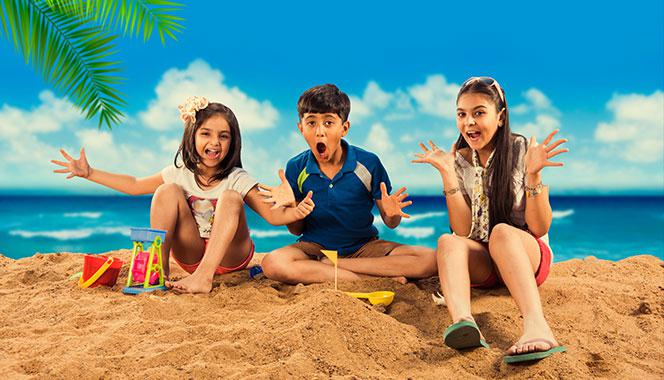
Discover how Outdoor Play for preschoolers supports confidence, physical activity, social skills, independence, creativity and outdoor learning.
Have you ever watched your child play outside and suddenly noticed something new?
Maybe they were scared to climb the slide a few weeks ago, but now they are trying it on their own. Maybe they usually stay quiet around other children, but after a few outdoor games, they start running around and joining in.
Table of Contents
These little moments can tell us a lot.
For young children, outdoor play is not just about getting some fresh air or burning off extra energy. It is a chance to move, explore, make choices, try things, make mistakes, and discover what their little bodies can do.
And sometimes, confidence grows quietly through these everyday experiences.
Why Do Children Need Outdoor Play?
Children are naturally curious and active. They want to touch things, run, jump, climb, collect, build, and ask questions.
When they spend time outdoors, there is usually more room to do all of this.
A child might run after a ball, jump over a small line, collect fallen leaves, balance on a safe surface, or simply walk around looking at everything they can find.
These may look like ordinary games to us, but children are learning while they play.
Outdoor play can help children practise:
- Running, jumping and balancing
- Hand-eye coordination
- Sharing and taking turns
- Making simple decisions
- Trying something unfamiliar
- Communicating with other children
- Solving small problems
- Becoming more independent
The best part is that children usually do not think of any of this as “learning.”
To them, they are simply playing.
How Does Outdoor Play Build Confidence?
Confidence often starts with a very small moment.
Imagine a child looking at a climbing frame.
The first time, they may stand nearby and watch everyone else.
The next time, they may put one foot on the first step.
A few days later, they climb a little higher.
Then one day they turn around and proudly say:
“Look! I can do it!”
That moment is important.
The child has experienced something for themselves. They tried, they managed it, and now they know they can try again.
This is one reason outdoor play for preschoolers can be so valuable. It gives children regular chances to experience small successes without making confidence feel like something they have to learn from a lesson.
Children Learn to Try Again
Not everything works on the first attempt.
A ball may roll away.
A tower may fall.
A child may lose their balance.
A game may not go the way they expected.
Outdoor play gives children plenty of these small experiences.
Instead of immediately solving every problem for them, adults can sometimes give children a moment to think.
For example, if a child is trying to get a ball from under a bench, you might ask:
“How can we get it out?”
They may try reaching for it, moving around the bench, or asking for help.
That little problem-solving experience matters.
Children begin to understand that when something does not work, they can try another way.
Outdoor Play Gets Children Moving Without Making Exercise Feel Like Exercise
Most preschoolers do not need someone telling them:
“Now it is time for your physical activity.”
Give them a ball and some space, and they will often create their own activity.
They may run after the ball, kick it, throw it, chase a friend, or invent a game around it.
This is why physical activity preschoolers can happen naturally through everyday play.
Running, jumping, climbing, throwing and balancing help children become familiar with how their bodies move.
There is no need to turn every activity into a competition.
A child does not have to run the fastest or jump the highest.
Simply being active and enjoying movement is valuable.
Outdoor Play Can Help With Social Confidence Too
Something interesting happens when children play together.
They have to communicate.
“Give me the ball.”
“My turn.”
“Come with me.”
“Let’s play this game.”
Sometimes they disagree too.
“That is mine.”
“I was playing here.”
“No, it’s my turn.”
These little disagreements are part of growing up.
With guidance from adults, children gradually learn to wait, take turns, share, listen, and express what they want.
A child who is quiet during a structured classroom activity may communicate much more naturally while playing.
There is a reason for talking.
They want the ball.
They want someone to join their game.
They want to show something they found.
That makes communication feel natural.
Outdoor Activities Give Children a Chance to Make Choices
At home, adults often decide what children will eat, wear, where they will go, and what they will do.
Outdoor play can give them a little more freedom.
“Should I play with the ball or draw with chalk?”
“Should I collect leaves or look for insects?”
“Should I climb or play with my friend?”
These are small decisions, but children are still practising independence.
You do not have to give them complete freedom.
Offering two simple choices can be enough.
“Do you want to play with the ball or go for a walk?”
That small choice can make a child feel involved.
Nature Turns Ordinary Moments Into Learning
Outdoor learning does not always need a worksheet or planned lesson.
Sometimes a child notices something and starts asking questions.
“Why is that leaf yellow?”
“Where is the ant going?”
“Why is the ground wet?”
“What is that bird doing?”
These questions are opportunities.
Instead of immediately giving the answer, try asking:
“What do you think?”
Now the child has a reason to observe, think and explain.
A short walk around a garden can become a conversation about colours, shapes, insects, weather, plants, sounds and seasons.
Children learn because they are interested.
Not Every Child Wants to Run Around
This is important to remember.
Some children love running and climbing.
Others would rather sit quietly and look at leaves, draw with chalk, collect stones, or watch birds.
That does not mean they are not enjoying being outdoors.
Outdoor activities kids can be active or quiet.
You could try:
- Nature walks
- Gardening
- Drawing outdoors
- Bubble play
- Collecting fallen leaves
- Sand play
- Simple ball games
- Looking for different shapes in nature
- Building with natural objects
The aim is not to make every child constantly active.
It is to give them a chance to explore and find activities they enjoy.
Simple Outdoor Activities Parents Can Try
You do not need expensive toys or complicated planning.
1. Follow the Line
Draw a simple line with chalk and ask your child to walk along it.
Make it straight, curved, or zigzag.
2. Nature Hunt
Ask your child to find something green, something soft, something small, or a leaf with an unusual shape.
3. Ball Play
Roll the ball to each other, kick it into a target, or make up a simple throwing game.
4. Bubble Chase
Blowing bubbles and asking your child to chase and pop them can turn into an active game very quickly.
5. Mini Obstacle Course
Create a simple, safe path where your child can walk, step over something, crawl, or jump.
6. Gardening Together
Let your child help with simple tasks such as watering plants or putting soil into a pot, with appropriate supervision.
You do not need to organise something new every day.
Even a regular walk outside can become valuable play and learning time.
How Can Parents Encourage More Outdoor Play?
Sometimes the hardest part is simply getting started.
You do not need to plan a perfect outdoor activity every day.
Try making outdoor time part of your normal routine.
For example:
- Go for a short walk after school
- Spend some time at a nearby play area
- Take a ball outside
- Let your child help with plants
- Play a simple chasing game
- Have a snack outdoors when practical
- Allow some unstructured play
And try not to worry if your child spends ten minutes doing something you did not plan.
Maybe they found a stick and spent the next ten minutes pretending it was a fishing rod.
That is still play.
What Role Does Preschool Have in Outdoor Play?
Preschool is one of the places where children get regular opportunities to interact with other children, follow routines, move their bodies, and explore different activities.
For families connected with Best Kiddonia Preschool and daycare centres Wakad in Pune, outdoor experiences can become a natural extension of what children are learning inside the classroom.
A teacher might notice that one child is hesitant to join a group game and gently invite them to help with a simple task first.
Another child may be encouraged to try a new movement.
Someone else may become fascinated by a leaf, insect, or plant and start asking questions.
These small experiences can make children feel more comfortable exploring their surroundings.
Of course, outdoor activities should always be age-appropriate and properly supervised.
What If My Child Is Afraid to Try Outdoor Activities?
Do not assume that a hesitant child needs to be pushed.
Sometimes children need to watch first.
You might say:
“You can watch for a little while.”
Then:
“Would you like to try it with me?”
Giving a child time can make a big difference.
If they eventually decide to try, let that decision be theirs when it is safe and appropriate.
And if you have ongoing concerns about your child’s movement, communication, social interaction, or other areas of development, it is worth discussing them with a qualified professional. Where appropriate, child developmental therapy may be considered based on professional guidance.
A Few Signs Your Child Is Growing More Confident
You may notice that your child:
- Tries activities they previously avoided
- Asks to play outside
- Joins other children more often
- Starts suggesting their own games
- Recovers more easily after small mistakes
- Asks for help when needed
- Wants to do simple things independently
- Talks excitedly about something they did outdoors
None of these has to happen every day.
Look for small changes over time.
A child who once said, “I can’t,” may eventually say, “Let me try.”
That change can be more meaningful than being the fastest runner or the best climber.
Sometimes the Smallest Outdoor Moments Matter Most
When we think about outdoor play, we may picture children running around a playground.
But sometimes the most meaningful moment is much smaller.
A child finally climbs the step they were scared of.
A quiet child asks another child to play.
A child falls, gets up, and tries again.
A child finds a tiny insect and spends five minutes watching it.
A child proudly says:
“I did it myself!”
These moments may seem ordinary to an adult.
For a young child, they can be big achievements.
Outdoor play gives children room to move, but it also gives them room to try, explore, make choices and discover their own abilities.
And when children are given regular opportunities to do these things in a safe and supportive environment, confidence can grow naturally, one small experience at a time.
For parents considering Best Kiddonia Preschool and daycare centres Wakad in Pune, outdoor play is worth looking at as more than just “playtime.”
For a young child, a few minutes of running, exploring, pretending, questioning, and trying something new can be a meaningful part of growing up.
FAQs
Why is outdoor play important for preschoolers?
Outdoor play gives children space to move, explore, interact with others, make choices, and practise physical and social skills through everyday experiences.
How does outdoor play help a child’s confidence?
Children get opportunities to try new things, overcome small challenges, make decisions, and experience success. These repeated experiences can gradually build confidence.
What are some easy outdoor activities for kids?
Ball games, bubble play, nature hunts, chalk games, gardening, short walks, simple obstacle courses, and pretend play are easy options.
Does outdoor play help physical development?
Yes. Activities such as running, jumping, climbing, throwing and balancing give children opportunities to practise gross motor skills and coordination.
What if my child prefers quiet outdoor activities?
That is completely fine. Outdoor play does not have to mean running. Nature observation, drawing, gardening, collecting leaves, and quiet exploration are also meaningful outdoor experiences.
Should parents organise every outdoor activity?
Not necessarily. Children also benefit from having some unstructured time where they can decide what to explore and create their own games.