
Learn how parents and preschool teachers can manage Child Changing Routine through communication, consistent routines and better school-home coordination.
“Why is my child behaving differently this week?”
Sometimes the reason is surprisingly simple.
Their bedtime changed. They started waking up earlier. They had a few days off from preschool. A family function disturbed their usual schedule. Maybe they were unwell for a few days and now their normal routine feels unfamiliar.
Table of Contents
For young children, even small changes can feel much bigger than they seem to adults.
A child may become more tired, emotional, clingy, hungry, quiet, or resistant to things they normally do without a problem.
This is why managing a child’s routine is not only a parent’s responsibility or a teacher’s responsibility.
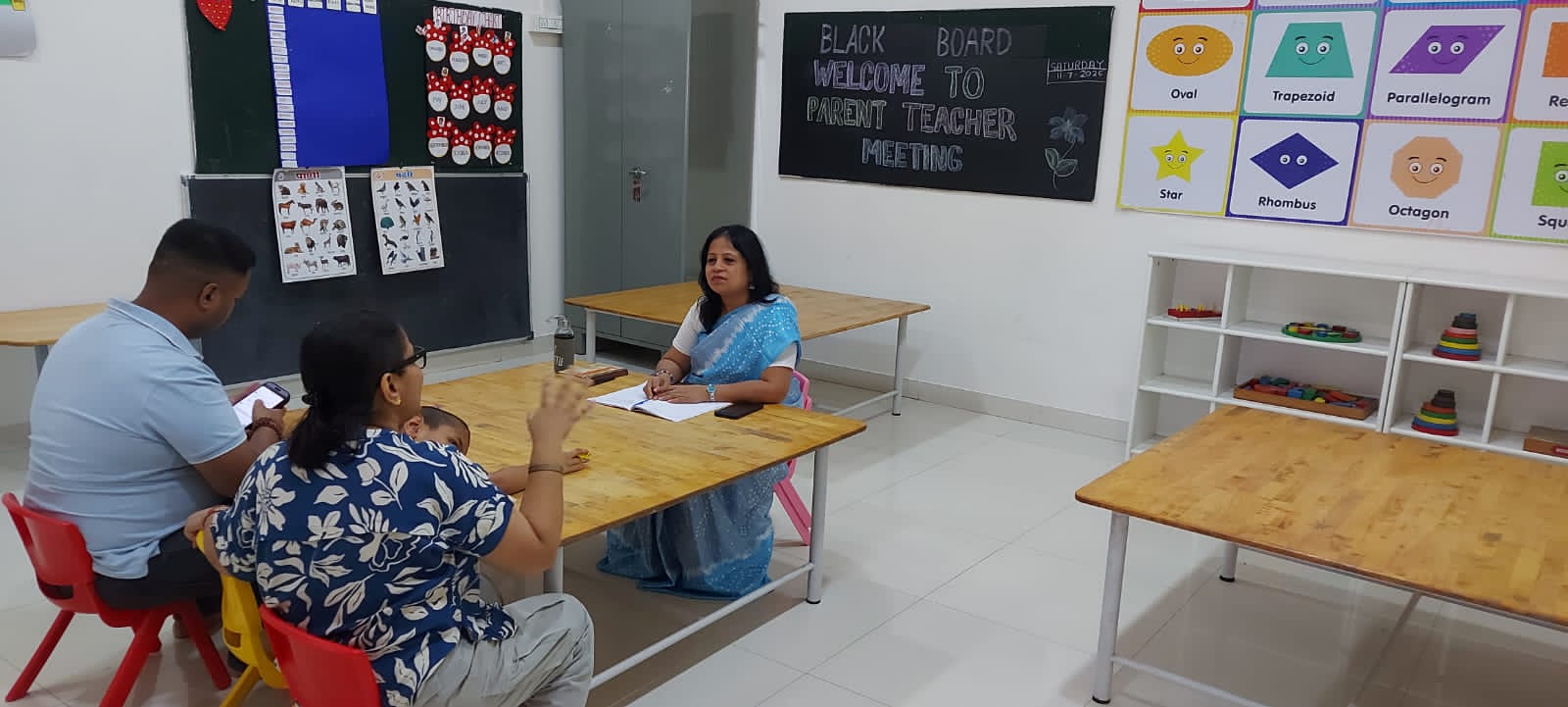
Parents and preschool teachers can work together to make changes easier for the child.
When home and preschool communicate regularly, children are more likely to experience a sense of consistency even when their routine is changing.
Why Do Child Changing Routine Affect Young Children?
Young children often feel comfortable when they know what comes next.
Wake up.
Get ready.
Have breakfast.
Go to preschool.
Play.
Eat.
Rest.
Come home.
Repeat.
This predictable pattern helps children understand their day.
When something suddenly changes, they may not understand why.
For example, if bedtime becomes later for several nights, your child may be tired at preschool the next morning. They might not participate as usual or may become more emotional.
The behaviour may look like stubbornness.
But sometimes the child is simply tired.
This is why understanding the reason behind a behaviour is often more useful than immediately trying to correct it.
What Counts as a Changing Routine?
Routine changes can happen for many reasons.
Some are planned:
- Starting preschool
- Changing school timings
- Moving to a new classroom
- Family holidays
- Festivals or celebrations
- Changing nap times
- Beginning a new activity
Others happen unexpectedly:
- Illness
- Travel
- Family events
- Changes in sleep
- A parent having a different work schedule
- Changes in eating habits
- Emotional events at home
Even weekends can affect some children.
A child may stay up later on Saturday and Sunday and then find Monday morning difficult.
That does not mean they suddenly dislike preschool.
Their body may simply be adjusting again.
How Can Parents Notice a Routine Change?
Parents usually know their child’s normal behaviour better than anyone.
You may notice:
“She’s waking up earlier.”
“He doesn’t want breakfast anymore.”
“She is getting tired before lunch.”
“He is becoming more emotional in the evening.”
“She doesn’t want to go to school this week.”
These observations are useful.
Instead of looking at each behaviour separately, try looking at the whole week.
Has anything changed recently?
Sometimes the answer becomes clear when you look at the bigger picture.
What Can Preschool Teachers Notice?
Teachers see children in a different setting.
A parent may notice that their child is unusually tired at home.
A teacher may notice that the same child is less interested in group activities or needs more reminders during the morning.
Neither observation is necessarily more important.
Together, they provide a clearer picture.
A teacher might say:
“Your child seemed tired today.”
The parent may then realise:
“Yes, bedtime has been later this week.”
That simple conversation can explain what otherwise might look like a sudden change in behaviour.
Why Parent-Teacher Communication Matters
Good parent teacher communication does not have to mean long meetings every week.
Sometimes a short conversation is enough.
For example:
“She’s been sleeping late for the last three days.”
“He didn’t eat much breakfast today.”
“We travelled over the weekend, so his routine is a little different.”
“She has started waking up during the night.”
These details can help teachers understand the child’s behaviour during the school day.
Likewise, teachers can share useful observations with parents.
For example:
“He was comfortable after morning circle today.”
“She needed a little extra time to join the activity.”
“He ate normally today.”
“She seemed more tired than usual.”
This kind of two-way communication helps parents and teachers respond to the child instead of making assumptions.
Keep the Basics Consistent
When a child’s routine is changing, it is not always possible to keep everything exactly the same.
But keeping a few important things predictable can help.
Try to maintain consistency around:
- Wake-up time
- Bedtime
- Meals
- Preschool timing
- Morning preparation
- Pick-up routine
- Rest time
The exact schedule may differ from family to family.
The goal is not perfection.
It is familiarity.
What If Weekends Completely Change the Routine?
This is common.
On weekends, children may sleep later, eat at different times, spend more time on screens, travel, or attend family events.
Then Monday arrives.
And suddenly:
“I don’t want to wake up.”
“I don’t want to go to school.”
“I am tired.”
Parents may think something is wrong with preschool.
Sometimes, the weekend simply made Monday harder.
Keeping the weekend routine reasonably close to the weekday routine can make the transition easier.
That does not mean children cannot enjoy late evenings or family activities.
A little flexibility is perfectly normal.
How Can Parents Prepare a Child for a Routine Change?
If you know something is going to change, tell your child beforehand.
For example:
“From Monday, you will wake up a little earlier.”
“Tomorrow we are going to a new classroom.”
“After the holiday, preschool will start again.”
Keep the explanation simple.
Young children do not need a long explanation about schedules.
They need to know what is happening and what they can expect.
You can also use visual cues.
For example:
Wake up → Brush → Breakfast → Get dressed → Preschool
A simple routine chart can help some children understand the sequence of their morning.
Give Children Time to Adjust
One of the biggest mistakes adults can make is expecting children to adjust immediately.
We may think:
“I explained it yesterday, so they should understand.”
But understanding a change and feeling comfortable with it are two different things.
A child may understand that preschool starts at a certain time but still feel upset about leaving home.
They may know that bedtime is earlier but still resist going to bed.
Adjustment takes repetition.
The same routine repeated over several days can eventually become familiar again.
What Should Teachers Do When a Child’s Routine Changes?
Teachers can help by keeping the classroom environment as predictable as possible.
For example:
- Follow familiar classroom routines
- Give warnings before transitions
- Use simple instructions
- Allow a little extra settling time
- Notice signs of tiredness
- Encourage children without unnecessary pressure
- Communicate significant changes to parents
A child who is struggling with a changed routine may not need punishment.
They may need more predictability.
Instead of:
“Why aren’t you listening today?”
A teacher might try:
“Let’s do this step first, and then we’ll go to the next activity.”
Breaking the routine into smaller steps can make it easier for the child to follow.
What If Home and Preschool Routines Are Different?
They do not have to be identical.
Home is home.
Preschool is preschool.
A child can learn that different places have different routines.
What matters is that the adults communicate about the important parts.
For example, if a child is learning to manage their belongings independently at preschool, parents can encourage similar independence at home.
If the child is practising asking for help at preschool, parents can give them opportunities to do the same at home.
This creates school home coordination without expecting both environments to operate in exactly the same way.
Avoid Changing Too Many Things at Once
If possible, avoid introducing several major changes simultaneously.
For example, starting preschool, completely changing bedtime, stopping naps, changing food habits, and introducing a new activity all at once can be a lot for a young child.
Sometimes changes cannot be avoided.
When they can be planned, introducing them gradually may make things easier.
One change becomes familiar before another begins.
What About Holidays and Long Breaks?
After a long break, some children may need a little time to get back into their preschool routine.
You might notice:
“I don’t want to go tomorrow.”
“Can I stay home?”
“I want to sleep more.”
This can happen even if your child usually enjoys preschool.
A few days before preschool starts again, gradually return to familiar sleep and morning routines.
Talk positively but realistically about going back.
“You’ll see your teacher again.”
“You can take your time getting ready.”
“Your usual classroom routine will start again.”
The aim is to make the return feel familiar rather than sudden.
What If a Child’s Behaviour Changes Suddenly?
A sudden change deserves attention, especially if it continues.
Parents and teachers can compare observations.
Ask:
- When did the change begin?
- Is it happening at home, preschool, or both?
- Has the child’s sleep changed?
- Has eating changed?
- Was there a recent illness or family event?
- Is the child avoiding a particular activity?
- Does the child settle after some time?
- Has anything changed in the preschool environment?
The purpose is not to blame anyone.
It is to understand what the child may be communicating through their behaviour.
If concerns continue around communication, emotional regulation, social interaction, learning, or other developmental areas, parents can discuss them with an appropriate qualified professional. Where needed, child developmental therapy may also be considered based on professional guidance.
A Simple Parent-Teacher Routine Check
Parents and teachers can use a simple conversation like this:
| Area | Parent Can Share | Teacher Can Share |
|---|---|---|
| Sleep | Recent bedtime or waking changes | Child’s energy level |
| Food | Changes in breakfast or appetite | Mealtime behaviour |
| Morning | Difficulties getting ready | Drop-off behaviour |
| Mood | Changes noticed at home | Mood during activities |
| Social | Changes in interaction | Friend and group participation |
| Communication | New concerns or changes | Classroom communication |
| Independence | New skills being practised | Skills seen at preschool |
This does not need to become a formal report.
Even a few useful observations can help both sides understand the child better.
When Should Parents Be More Concerned?
Routine changes are a normal part of childhood.
However, if a change in behaviour is strong, persistent, or affecting the child’s everyday life, it should not simply be ignored.
Parents can speak with the preschool teacher and consider professional guidance if they notice ongoing:
- Difficulty communicating
- Social withdrawal
- Significant emotional distress
- Problems with everyday routines
- Loss of previously developed skills
- Major changes in eating or sleeping
- Difficulty participating in normal activities
The purpose of seeking support is not to label the child.
It is to understand what is happening and decide what kind of support may be useful.
For Parents, Progress May Look Small
Sometimes parents expect improvement to look like:
“My child is completely fine now.”
But progress can be much smaller.
Last week, your child cried for twenty minutes.
This week, they cried for ten.
Last week, they refused to join an activity.
This week, they watched from nearby.
Last week, they needed help with every step of the morning routine.
This week, they managed two steps independently.
These small changes matter.
Children often adjust gradually rather than suddenly.
Children Do Better When the Adults Around Them Work Together
A changing routine is not always a problem that needs to be “fixed.”
Sometimes a child simply needs time.
Sometimes they need a little more sleep.
Sometimes they need to know what is happening next.
And sometimes parents and teachers need to compare notes before they can understand what is really going on.
That is why child routine changes are easier to manage when home and preschool communicate openly.
Parents know the child at home.
Teachers know the child in the classroom.
Both perspectives matter.
For families connected with Best Kiddonia Preschool and daycare centres Wakad in Pune, regular and simple communication between parents and teachers can help make everyday transitions smoother and help adults respond to changes with more understanding.
The goal is not to create a perfectly predictable life for a child. That is impossible.
Children will have holidays, late nights, illnesses, family events, new classrooms, new experiences, and unexpected changes.
What they need is something more realistic:
familiar routines, patient adults, clear communication, and the confidence that the grown-ups around them are working together.
For parents considering Best Kiddonia Preschool and daycare centres Wakad in Pune, that partnership between home and preschool can make a meaningful difference, especially during periods when a child’s usual routine is changing.
FAQs
Why do children struggle with routine changes?
Young children often feel more comfortable when they know what will happen next. A sudden change in sleep, meals, school timings, or daily activities can temporarily make them feel unsettled.
How can parents help a child adjust to a new routine?
Keep important parts of the day predictable, explain changes simply, prepare the child in advance when possible, and give them enough time to practise the new routine.
Why is parent teacher communication important?
Parents and teachers see the child in different environments. Sharing observations can help both understand changes in behaviour, sleepiness, communication, participation, and emotional responses.
Should home and preschool follow exactly the same routine?
No. They can have different routines. What helps is consistency around important expectations and communication between parents and teachers.
What should I do if my child becomes difficult after a routine change?
First, look for the reason behind the behaviour. Check sleep, food, recent changes, tiredness, and emotional experiences. Talk with the teacher if the behaviour is also happening at preschool.
How long does it take for a child to adjust to a new routine?
There is no fixed timeline. Some children adapt quickly, while others need repeated experiences over several days or weeks. Consistency and patience can make the process easier.