Learn practical ways to teach social skills for preschoolers, including sharing, taking turns, joining games and making friends.Social Skills for Preschoolers: Sharing, Taking Turns & Making Friends
“My child doesn’t share their toys. Will they have trouble making friends at preschool?”
This is something many parents wonder about before their child starts preschool.
You may have seen your child grab a toy from another child, say “Mine!”, or become upset when someone else gets a turn first. You may also notice that your child prefers playing alone and wonder whether they will know how to make friends at school.
Table of Contents
The good news is that children are not expected to know all these social skills perfectly before starting preschool.
Sharing, waiting, listening, joining a game, and handling small disagreements are skills children learn with practice.
Preschool gives children many opportunities to develop these skills, but parents can also introduce them naturally at home through everyday play.
Do Young Children Really Know How to Share?
Not always.
For a young child, a favourite toy can feel very important. Asking them to immediately hand it over to another child may be difficult.
When a child says, “It’s mine,” they are not necessarily being selfish. They are still learning about ownership, patience, other people’s feelings, and the idea that they can get something back after sharing it.
Instead of forcing a child to give away a favourite toy, start with simple situations.
For example:
“Let’s give the ball to Dad and then Dad can roll it back to you.”
Now the child begins to experience the idea of taking turns without feeling that their toy has disappeared forever.
Why Are Social Skills Important Before Preschool?
Preschool is often one of the first places where children spend regular time with a larger group of children without their parents beside them.
They may need to:
- Wait for a turn
- Ask for a toy
- Listen to another child
- Join a group activity
- Share classroom materials
- Follow simple rules
- Express what they want
- Ask an adult for help
- Handle small disagreements
These everyday interactions are part of social skills for preschoolers.
A child does not need to master everything before their first day.
The goal is simply to give them opportunities to practise.
Sharing Does Not Always Mean Giving Everything Away
This is an important distinction.
Parents sometimes say:
“Tell your child to share everything.”
But children can also learn that some belongings are special and that they have a right to say no.
For example, if your child has a favourite teddy bear, you can say:
“You don’t have to give Teddy away. Let’s choose another toy to play with together.”
This teaches a more balanced idea of sharing.
Sharing can mean:
- Offering something for another child to use
- Playing together with the same toy
- Taking turns
- Giving someone a chance to participate
- Sharing materials during an activity
It does not have to mean giving up everything immediately.
Easy Sharing Activities for Children
You don’t need special worksheets to teach sharing.
Everyday play works well.
1. Share a Snack
During a family snack, you can talk about offering food to another family member when appropriate.
“Would you like to give one to Grandma?”
Keep it casual rather than turning it into a test.
2. Build Something Together
Use blocks or building pieces and create something together.
You can say:
“I’ll use these blocks and you can use these. Let’s build one house.”
This introduces the idea of using materials together.
3. Play With One Ball
Roll a ball between two people.
“My turn.”
“Your turn.”
The repetition makes the idea easy for a child to understand.
4. Use Pretend Play
Pretend to run a small shop, kitchen, school, or restaurant.
Children can practise giving, receiving, waiting, and communicating through the game.
5. Read Stories About Friendship
Choose age-appropriate stories where characters play together, disagree, help each other, or take turns.
After the story, ask:
“What could they do now?”
This can help children think about other people’s perspectives.
Teaching Your Child to Take Turns
Taking turns can be harder than sharing.
Imagine a child riding a bicycle or playing with their favourite toy.
You say:
“Now it’s your friend’s turn.”
Your child says:
“No!”
That reaction is common.
Instead of expecting a perfect response, start with very short turns.
For example:
“You have the ball. Then I’ll have the ball.”
You can use a simple phrase repeatedly:
“Your turn, my turn.”
Over time, children begin to understand the pattern.
You can also use a timer for certain activities, but you do not need one for every situation. Sometimes simply showing whose turn comes next is enough.
Practice Waiting in Everyday Life
Children hear “wait” many times during the day.
But waiting is not easy when you are three years old.
You can practise in small ways.
If your child asks for water while you are filling a bottle, say:
“I’m filling it. Wait for a moment, then I’ll give it to you.”
If you are finishing a phone call:
“I’m almost finished. Then we can play.”
These tiny moments help children gradually understand that waiting does not mean “never.”
It means “not right now.”
What About Making Friends?
Parents sometimes imagine that their child will walk into preschool and immediately choose a best friend.
It may happen.
But it may not.
Some children start conversations quickly. Others watch from the side before joining.
Some children prefer one friend rather than a large group.
Some children enjoy playing beside other children before they actually play together.
All of these can be normal parts of early social development.
Friendship does not have to happen on the first day.
How Can Parents Help a Shy Child?
Try not to label your child as:
“She is very shy.”
“He doesn’t know how to make friends.”
Children can start believing the labels adults repeatedly use about them.
Instead, describe what you see and encourage small steps.
For example:
“You watched the children playing. Would you like to stand closer?”
Or:
“Would you like to show that toy to the other child?”
You don’t need to push your child into a group.
Sometimes watching is the first step toward joining.
Teach Your Child Simple Ways to Join a Game
A child may want to play with others but simply not know how to enter the game.
Practise simple phrases at home:
“Can I play?”
“Can I have a turn?”
“What are you making?”
“Can I play too?”
“Let’s build together.”
You can even practise these through pretend play.
One person can pretend to be a child already playing, while your child practises asking to join.
It may feel like a small activity, but having the words ready can make a real situation easier.
What Should Parents Do When Children Fight Over Toys?
They will probably fight over toys sometimes.
That does not mean they are failing at social development.
If two children want the same toy, an adult can calmly help them work through the situation.
Instead of:
“Stop fighting!”
Try:
“You both want the truck. Let’s think about what we can do.”
Then offer simple choices:
“Can one child use it first and then the other?”
“Can you play with it together?”
“Would you like another truck while you wait?”
The child is learning that disagreements can be solved without shouting or hitting.
Children Learn Social Skills by Watching Adults
Children notice how adults behave.
If you say:
“Please wait, I’m listening to Grandma.”
or
“Let’s take turns choosing the game.”
you are showing them what these behaviours look like.
You can also model apologies naturally.
For example:
“I spoke too loudly. I’m sorry.”
This teaches children that saying sorry does not mean they are a bad person. It means they can recognise what happened and repair the situation.
Don’t Expect Perfect Sharing Every Time
This is one of the biggest things parents can remember.
Your child may happily share crayons one day and refuse to share a favourite toy the next day.
They may wait patiently at preschool but become impatient with a sibling at home.
Social development is not a straight line.
Children are still learning to manage emotions while understanding what other people want.
Instead of looking for perfect behaviour, look for small improvements.
Maybe your child used to grab a toy immediately but now asks first.
Maybe they used to scream when someone took a turn but now wait with help.
Those changes matter.
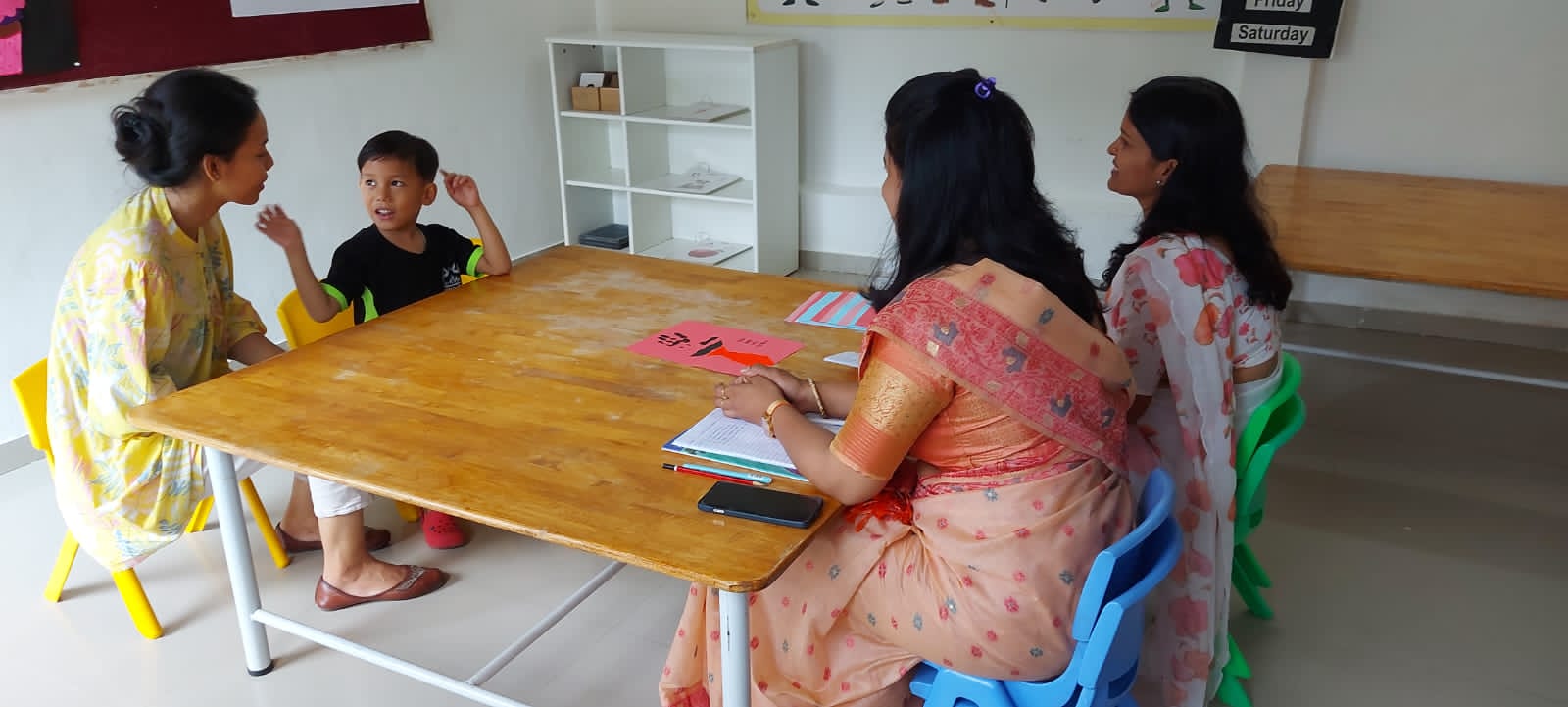
How Preschool Supports Social Development
A preschool environment naturally creates situations where children practise being around others.
They may sing together, build together, sit in groups, play games, share classroom materials, and learn simple routines.
For families connected with Best Kiddonia Preschool and daycare centres Wakad in Pune, these everyday interactions can help children gradually become more comfortable communicating with teachers and other children.
A teacher can also guide children through small conflicts and help them find words for what they are feeling.
For example:
“Tell your friend, ‘I was using that.’”
or
“Let’s give everyone a turn.”
Children learn through these repeated experiences.
What If My Child Still Struggles With Social Interaction?
Some children need more time to become comfortable around other children.
That alone does not mean there is a problem.
However, if you consistently notice difficulties with communication, joining activities, responding to others, managing emotions, or interacting socially, it can be useful to discuss your observations with your child’s teacher and a qualified child-development professional.
If additional support is recommended, child developmental therapy may be one option depending on the child’s individual needs.
The purpose of seeking support is not to compare your child with other children.
It is to understand your child’s strengths and find practical ways to help them.
A Simple Social Skills Practice Checklist
You can use everyday situations to practise these skills at home.
| Skill | Simple Practice |
|---|---|
| Sharing | Share blocks, crayons or play materials |
| Taking turns | Play ball games or board games |
| Waiting | Practise waiting for a short period |
| Asking | Teach “Can I have a turn?” |
| Joining | Practise “Can I play?” |
| Listening | Take turns speaking during conversations |
| Cooperation | Build or complete something together |
| Problem-solving | Talk through small disagreements |
| Empathy | Ask, “How do you think they feel?” |
There is no need to practise all of these every day.
Normal family life provides plenty of opportunities.
Social Skills Grow Through Everyday Moments
Your child does not need to become an expert at sharing before their first day of preschool.
They may still say “Mine!”
They may forget to wait.
They may grab a toy.
They may stand quietly while other children play.
And they may surprise you too.
One day, they might hand another child a toy without being asked.
They might wait for their turn.
They might say, “Come play with me.”
These are the moments parents should notice.
Social skills for preschoolers develop slowly, through repetition, modelling, play, and real interactions.
So rather than worrying about whether your child is already “good at making friends,” focus on giving them small opportunities to practise.
Play a simple turn-taking game.
Let them help you share something.
Practise asking to join a game.
Talk about how another person might feel.
And when they handle a difficult social moment a little better than they did before, notice it.
For parents considering Best Kiddonia Preschool and daycare centres Wakad in Pune, the goal is not to send a child to preschool who already knows everything about friendship.
It is to give them a supportive environment where they can keep learning how to share, communicate, cooperate, solve small problems, and build relationships.
Those skills take time.
And that is completely okay.
FAQs
How can I teach my child to share before preschool?
Start with simple everyday situations such as sharing toys, playing with one ball, building together, or taking turns choosing a game. Keep the practice relaxed rather than forcing your child to share every possession.
At what age should children learn to take turns?
Children begin developing an understanding of taking turns during the early years, but it takes time. Preschool-aged children are still learning patience and self-control, so adults often need to guide them.
What if my child does not want to share?
Stay calm. Acknowledge that the toy is important to them and introduce the idea of taking turns gradually. Children do not need to give up every favourite possession to learn social skills.
How can I help my child make friends at preschool?
Teach simple phrases such as “Can I play?” and give your child opportunities to practise playing with other children. Avoid forcing friendships and allow relationships to develop naturally.
Is it normal for my child to play alone?
Yes. Some children enjoy independent play or need time to observe before joining others. What matters is the overall pattern of communication and social interaction.
How do I teach my child to handle disagreements?
Stay calm, name the problem, and help children think of simple solutions. Over time, they can learn to use words, take turns, ask for help, and negotiate rather than immediately reacting physically.