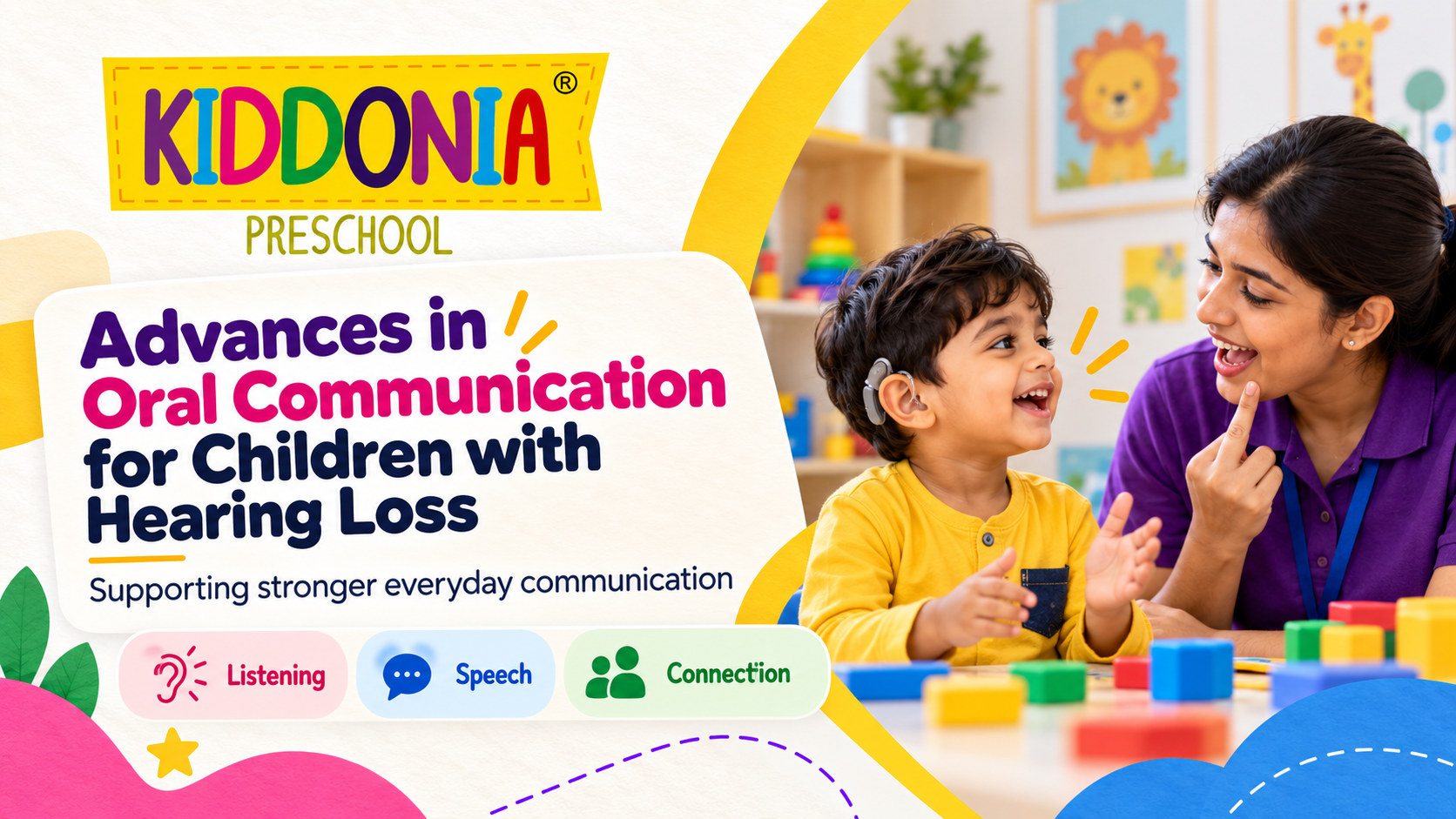
Learn how hearing technology, Oral Communication Children, inclusive early education help children with hearing loss develop communication skills. Every child deserves the opportunity to express their thoughts, understand others and participate confidently in everyday life. For children with hearing loss, developing spoken communication may involve additional support, specialised strategies and consistent practice.
Advances in hearing technology, speech-language therapy and early intervention have created more opportunities for children with hearing loss to develop communication skills. However, every child’s experience is different. Progress depends on several factors, including the type and degree of hearing loss, access to appropriate support, individual needs and family involvement.
Table of Contents
For parents exploring Early Childhood Education in Wakad, understanding how hearing loss can affect communication is an important part of choosing a supportive learning environment.
The goal is not to make every child communicate in exactly the same way. It is to help each child develop effective communication skills and participate meaningfully at home, in school and in the wider community.
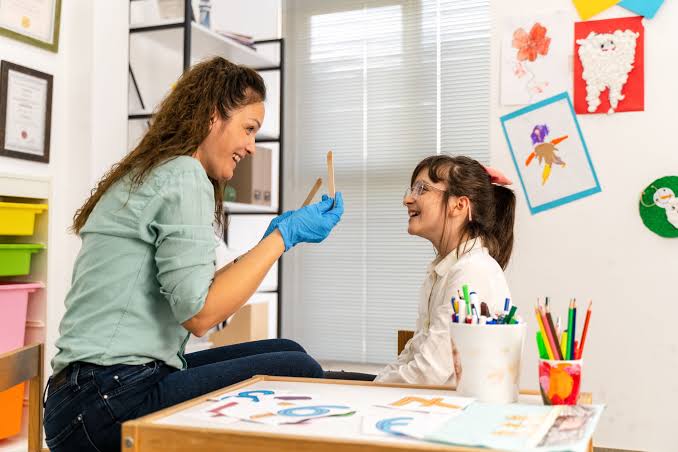
Understanding Oral Communication Children with Hearing Loss
Oral communication involves understanding and expressing messages through spoken language. It includes listening, speaking, understanding words, forming sentences and participating in conversations.
Children with hearing loss may find some of these skills more challenging because they have reduced access to certain speech sounds. The level of difficulty varies considerably from one child to another.
Some children may have difficulty hearing speech clearly in noisy environments. Others may need additional support to recognise speech sounds, understand spoken instructions or develop clear pronunciation.
With appropriate assessment and support, children can work towards communication goals suited to their abilities.
It is also important to remember that spoken communication is not the only valuable way to communicate. Sign language, gestures, visual supports and other communication methods may be appropriate depending on the child’s needs and family preferences.
How Early Identification Can Support Communication
Identifying hearing loss early can help families understand their child’s hearing needs and explore suitable support.
Parents may first become concerned when a child does not respond consistently to sounds, has difficulty following spoken instructions or appears to miss parts of conversations. These observations do not confirm hearing loss, but they can be reasons to seek professional advice.
A hearing assessment conducted by an appropriately qualified professional can help determine whether hearing loss is present and what further steps may be needed.
Early support may involve hearing technology, communication-focused intervention, guidance for parents and regular monitoring of the child’s development.
The appropriate plan should be based on the child’s hearing assessment and individual communication needs rather than assumptions about what every child with hearing loss requires.
Advances in Hearing Technology
Developments in hearing technology have expanded the options available to some children with hearing loss.
Digital hearing aids
Hearing aids amplify sound and may help children access speech and other sounds more effectively. Modern devices can include features designed to improve listening in different environments.
However, hearing aids do not restore typical hearing, and their benefits vary depending on the individual’s hearing profile. Proper fitting, follow-up appointments and ongoing monitoring are important.
Cochlear implants
For some children with significant hearing loss, cochlear implants may be considered following specialist assessment.
Unlike hearing aids, which amplify sound, cochlear implants use an implanted system to provide electrical stimulation to the auditory nerve. They may help eligible children access sound, but outcomes vary.
A cochlear implant does not automatically result in spoken-language development. Children may need ongoing listening support, speech-language intervention and regular device management.
Assistive listening technology
Classroom listening systems and other assistive technologies may help some children access a teacher’s voice more clearly, particularly when background noise or distance makes listening difficult.
The suitability of a particular device depends on the child’s hearing needs, educational setting and existing technology.
The Role of Speech and Language Therapy
Hearing technology can improve access to sound for some children, but access to sound and understanding spoken language are not the same thing.
Speech-language therapy can help children develop communication skills based on their individual needs.
Therapy may focus on:
- Recognising and understanding spoken words
- Developing vocabulary
- Understanding sentences and instructions
- Producing speech sounds
- Improving speech clarity
- Building conversational skills
- Expressing thoughts and feelings
- Participating in everyday communication
Activities may include listening games, picture-based tasks, storytelling, conversation and practice with familiar words.
The therapist may also guide parents on how to encourage communication during daily routines.
Progress should be reviewed regularly, with goals adjusted as the child’s abilities and needs change.
Family Involvement Makes Everyday Communication Meaningful
Children communicate throughout the day, not only during therapy sessions.
Parents and caregivers can support communication by making everyday interactions easier to follow and participate in.
Get the child’s attention before speaking
Using the child’s name or another familiar signal can help them know that someone is speaking to them.
Speak naturally and clearly
Parents do not need to exaggerate every word or speak unnaturally slowly. Clear speech, a comfortable pace and a suitable environment can make communication easier.
Reduce background noise
Televisions, music and other competing sounds can make listening more difficult. When possible, choose a quieter place for conversations.
Use visual context
Facial expressions, gestures, pictures and demonstrations can help children understand what is being communicated.
Make conversations interactive
Give children time to respond, ask questions and express their ideas. Communication should be a two-way interaction rather than a constant series of instructions.
Families should follow any individual recommendations provided by their child’s hearing or communication professionals.
Choosing Early Childhood Education in Wakad
A preschool is often one of the first places where children regularly communicate with people outside their family.
For a child with hearing loss, the classroom environment can make a meaningful difference to participation. Parents comparing Early Childhood Education in Wakad may want to understand how teachers support children with different communication needs.
Consider asking the school:
- Can the child sit where they can see the teacher clearly?
- How are instructions communicated during group activities?
- Are teachers aware that background noise may affect listening?
- Can visual demonstrations support spoken instructions?
- How does the school communicate with parents about classroom participation?
- Is the school willing to coordinate with the child’s support professionals when appropriate?
A supportive classroom does not need to be complicated. Small adjustments, such as facing the child while speaking, checking understanding and using visual cues, can make everyday communication more accessible.
The right approach will depend on the child’s individual needs.
What to Look for in a Preschool in Wakad
When comparing a Preschool in Wakad, parents should look beyond facilities and academic activities.
For a child with hearing loss, it may be useful to observe how teachers interact with children and manage group communication.
A welcoming learning environment should encourage children to ask questions, participate in activities and express themselves without unnecessary pressure.
Parents can also consider class routines, classroom noise, teacher communication and the school’s willingness to understand the child’s needs.
The Best Preschool in Wakad for a particular child is not necessarily the one with the most activities or the largest facilities. It is the one that can provide an appropriate, supportive environment for that child’s learning and participation.
Supporting Children in Play School and Daycare
Play is an important part of early childhood. Through games, stories, songs and pretend activities, children have opportunities to interact, learn new words and practise social communication.
Parents exploring a Play School in Wakad can ask how activities are adapted so children can follow instructions and participate in group play.
For example, a teacher might demonstrate an activity while explaining it, show a picture before changing tasks or make sure children can see the person speaking during group discussions.
Families considering Daycare in Wakad may also want to understand how caregivers communicate during meals, playtime and daily routines.
These settings do not replace hearing care or speech-language therapy. However, an inclusive environment can help children use their communication skills in everyday situations.
Working Together: Parents, Teachers and Professionals
Children benefit when the adults supporting them understand their communication needs.
Parents can share relevant information with teachers, such as the child’s preferred communication methods, hearing technology requirements and strategies recommended by professionals.
With appropriate consent, teachers and therapists may be able to coordinate around practical goals.
For example, if a child is practising new vocabulary, familiar words can be reinforced during stories, play and daily classroom routines.
This does not mean turning every school activity into therapy. The purpose is to create consistent opportunities for communication while allowing the child to enjoy learning and social interaction.
Families searching for the Best Preschool in Pune may find it helpful to ask about the school’s approach to inclusion, parent communication and individual learning needs.
Final Thoughts
Advances in hearing technology, communication support and early intervention have created more options for children with hearing loss. Still, no single device or approach works in the same way for every child.
The most helpful starting point is understanding the child’s hearing and communication needs, seeking appropriate professional guidance and creating opportunities to communicate throughout the day.
For families exploring preschool and early learning options, the classroom environment deserves careful consideration. Teachers who communicate clearly, use visual support and encourage participation can help children feel more included in everyday activities.
Parents researching early childhood education programmes can consider how a learning environment may fit their child’s needs, alongside guidance from hearing and communication professionals.
A provider such as Trice may also appear during a family’s research into child-focused services. Regardless of the provider, families should check qualifications, available support and whether the services are appropriate for their child’s specific needs.
Ultimately, supporting a child with hearing loss means recognising their strengths, respecting their preferred ways of communicating and helping them build meaningful connections with the people around them.
FAQs
Can children with hearing loss develop spoken language?
Some children with hearing loss develop spoken language with appropriate access to communication, technology where suitable, and professional support. Outcomes vary, so individual assessment and realistic goals are important.
Do all children with hearing loss need hearing aids?
No. The appropriate support depends on the type and degree of hearing loss and the child’s individual circumstances. Hearing professionals can explain the available options.
Can a child with hearing loss attend a regular preschool?
Some children with hearing loss attend mainstream preschools. The suitability of a particular setting depends on the child’s needs, available support and the school’s ability to provide an accessible learning environment.
How can parents help at home?
Parents can support communication by speaking clearly, reducing background noise, using visual context, reading together and giving children opportunities to participate in conversations.
Is speech therapy useful for children who use hearing technology?
Speech-language therapy may support communication goals for children who use hearing aids or cochlear implants. The type and frequency of support should be based on the child’s individual needs.
Should teachers know about a child’s hearing loss?
Sharing relevant information with teachers can help them understand the child’s communication needs and make appropriate classroom adjustments. Parents can discuss what information should be shared and how.