Kids learn well when they are happy and having fun. Playing is a way for them to learn new things and develop important skills like being creative and working with others. At Kiddonia Preschool in Wakad, Pune we think playing is a way to learn so we make sure our kids have lots of fun activities to do.
Some parents have a time getting their kids to focus on learning. The old way of teaching can be boring for kids.. When kids play they can learn new things in a fun way like through games, stories and puzzles. This helps them pay attention and feel more confident.
Features: We have lots of activities for our kids like:
- Learning through playing games
- Telling stories in a fun way
- Playing games and solving puzzles
- Helping kids work with others and understand their feelings
- Improving our kids communication skills
- Making our classrooms a fun place to learn
Services: We offer:
- Playgroups for kids
- Classes for older kids
- Fun learning activities
- Time to play inside and outside
- Programs to help kids develop new skills when they are young
When kids learn through play they really enjoy it and do not feel stressed. It helps them want to learn more be independent work with others and feel good about themselves. This helps them grow up to be happy and smart.
Looking for a preschool in Wakad, Pune that uses play to teach kids? Kiddonia Preschool is the place for you. We make learning fun and easy for your kids.
Learning Through Play, Preschool in Wakad Pune Play-Based Learning, for Kids, Early Childhood Education, Best Preschool Pune, Child Development Activities
#LearningThroughPlay #PreschoolInWakad #PlayBasedLearning #KidsEducation #EarlyLearning #ChildDevelopment #BestPreschoolPune #KiddoniaPreschool
Learning Through Play: The Best Way Kids Learn Naturally
Children are naturally curious. Give a child a cardboard box, some crayons, or a pile of building blocks, and suddenly an entire world appears in their imagination. That simple moment explains why play-based learning has become one of the most powerful approaches in early childhood education today. Instead of forcing children into rigid academic routines too early, play-based learning allows them to explore, question, experiment, and discover in a way that feels joyful and natural.
Parents today are asking an important question: “Should learning feel like pressure, or should it feel like discovery?” The answer is becoming clearer every year. Children learn best when they are engaged emotionally, physically, socially, and creatively. That is exactly what learning through play provides.
For schools like Kiddonia Preschool, play-based learning is not simply an activity added to the timetable. It becomes the foundation of how children grow, think, communicate, and build confidence during their most important developmental years.
Understanding Play-Based Learning
What Makes Play Different From Traditional Teaching
Traditional education often focuses heavily on memorization, repetition, and structured instruction. Children sit quietly, listen carefully, and are expected to absorb information exactly as it is presented. While structure certainly has its place, very young children do not naturally learn this way. Their brains are wired for movement, exploration, experimentation, and curiosity. Play-based learning respects how children naturally interact with the world around them.
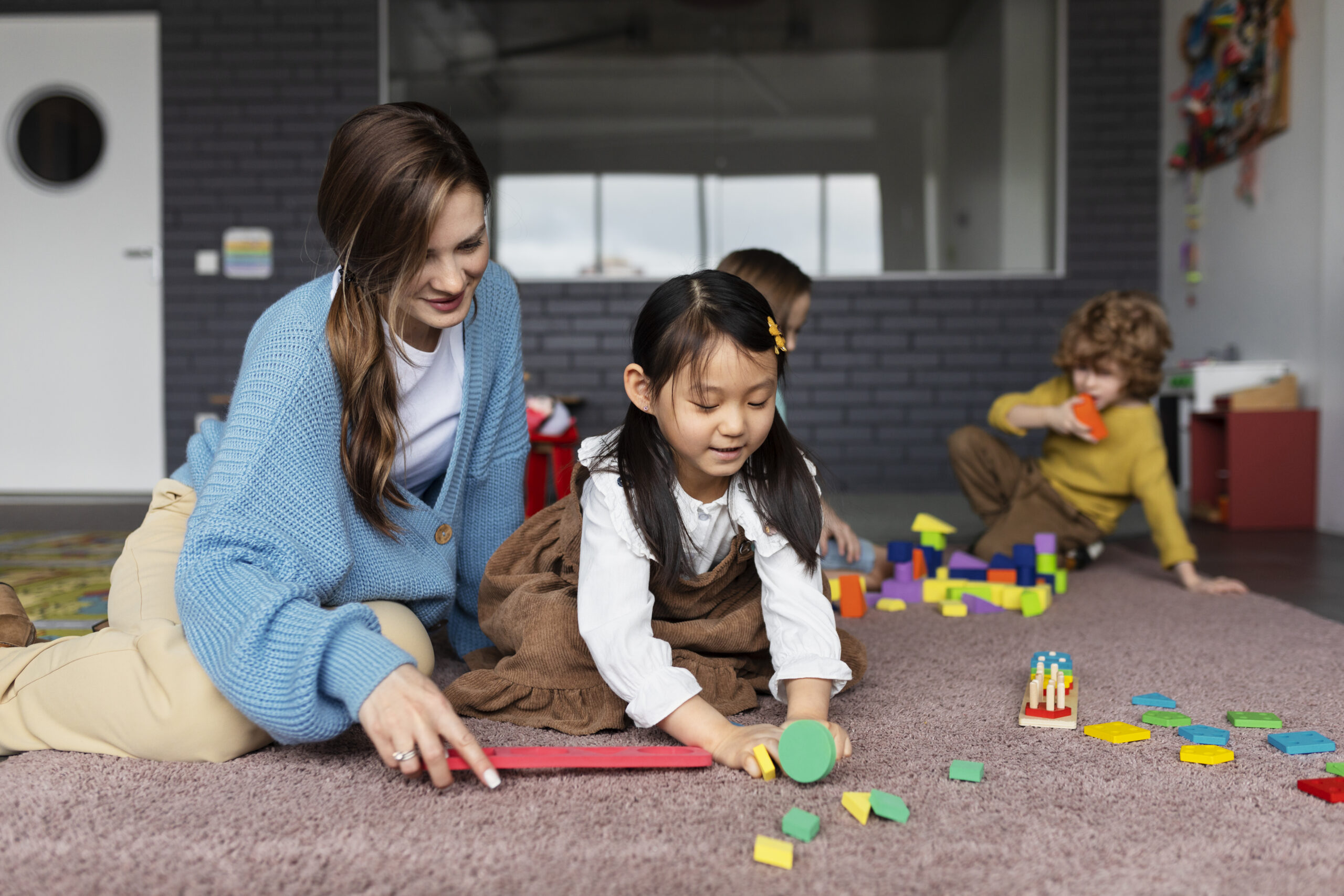
Think about how toddlers learn to walk. Nobody gives them a lecture on balance or coordination. They stumble, fall, try again, and eventually master the skill through repeated playful exploration. Learning works the same way. When children build towers with blocks, role-play as shopkeepers, paint pictures, or dig through sand, they are developing problem-solving skills, communication abilities, creativity, and emotional intelligence without even realizing it.
This approach transforms learning from something stressful into something exciting. Instead of asking, “Did the child memorize the answer?” educators begin asking, “Did the child explore, question, and understand?” That shift changes everything. Children become active participants rather than passive listeners.
Research from Proschool Education highlights that preschool education significantly improves a child’s readiness for future academic success and social development. Children who experience meaningful early learning environments often perform better in school later in life.
Why Children Naturally Learn Through Exploration
Children are little scientists. Every question they ask is an experiment. Why is the sky blue? What happens if I mix these colors? Why does ice melt? Why do leaves fall? Curiosity drives learning far more effectively than pressure ever could.
Play-based education taps directly into this natural curiosity. Instead of giving children all the answers immediately, teachers create opportunities for discovery. A water table becomes a science experiment. A pretend kitchen becomes a communication lesson. Building blocks become engineering practice. Storytelling becomes language development.
The beauty of playful exploration lies in its flexibility. Every child learns differently. Some children love art, others prefer movement, while some enjoy puzzles or dramatic play. Through play, children discover their interests and strengths naturally. This builds confidence because learning feels personal and enjoyable rather than forced.
UNICEF reports that nearly 4 in 10 children worldwide do not receive enough stimulating activities with caregivers at home, even though these interactions strongly influence emotional and cognitive growth. That statistic shows how essential playful interaction really is during early childhood.
The Science Behind Learning Through Play
Brain Development in Early Childhood
The early years of childhood are often compared to constructing the foundation of a building. If the base is strong, everything built afterward becomes stronger too. According to Early Childhood Education, the years from birth to age eight represent one of the most critical periods of brain development in human life.
During these years, children form millions of neural connections every second. Experiences shape how those connections develop. Positive interactions, playful learning, emotional safety, and active exploration strengthen brain pathways linked to memory, creativity, emotional regulation, and language development.
When children engage in hands-on activities, their brains activate multiple learning systems at once. For example, while playing with clay, a child uses fine motor skills, sensory processing, imagination, decision-making, and communication simultaneously. Compare that with passive screen watching, where interaction remains limited. The difference in developmental value is enormous.
Experts increasingly agree that play is not a distraction from learning. Play is learning. It provides the emotional engagement necessary for long-term memory formation and deeper understanding.
How Play Builds Neural Connections
Imagine the brain as a network of roads. Every new experience creates another pathway. Repeated experiences strengthen those pathways until they become permanent highways of understanding. Play accelerates this process because it combines emotion, movement, creativity, and problem-solving all at once.
Activities like pretend play are especially powerful. When children act out scenarios such as running a grocery store or pretending to be doctors, they are learning sequencing, vocabulary, emotional expression, cooperation, and social negotiation. Their brains are practicing real-world thinking in a safe environment.
A global UNESCO report notes that quality early childhood education improves school readiness and lifelong well-being while also supporting emotional and social development. The benefits extend far beyond academics. Children who learn through exploration often become more adaptable, independent, and resilient later in life.
Cognitive Benefits of Play-Based Learning
Problem Solving and Critical Thinking
One of the greatest strengths of play-based learning is how naturally it develops problem-solving abilities. Children constantly face challenges during play. How can I make this tower taller without falling? How do I fit all the puzzle pieces together? What happens if I pour too much water into this container?
These small challenges may seem simple to adults, but they train the brain to think critically. Children learn to predict outcomes, test solutions, adjust strategies, and persist through failure. That process builds resilience alongside intelligence.
Unlike traditional worksheets that usually have one correct answer, play encourages open-ended thinking. There may be ten ways to build a bridge with blocks. There may be endless possibilities in storytelling or creative art. This freedom strengthens innovation and flexibility.
Modern workplaces increasingly value creativity, adaptability, and collaboration more than memorization alone. Ironically, many of those future-ready skills begin in preschool playrooms rather than formal lectures.
Creativity and Imagination Development
Creativity is often treated like a bonus skill, but in reality, it shapes how children approach life itself. Imaginative play teaches children to think beyond limitations. A blanket becomes a castle. A stick becomes a magic wand. A cardboard box becomes a spaceship traveling to another galaxy.
That imaginative flexibility is incredibly important for cognitive growth. Creative children often become better communicators, stronger problem-solvers, and more confident decision-makers. They learn that ideas matter and that mistakes are part of discovery rather than signs of failure.
Play-based learning also removes the fear associated with being “wrong.” In many traditional settings, children become anxious about perfect answers. Through play, experimentation feels safe. Children gain confidence because learning feels exploratory instead of judgmental.
Social and Emotional Growth Through Play
Building Confidence and Communication
Play teaches children how to express themselves. During group activities, they learn how to ask questions, explain ideas, negotiate rules, and listen to others. These communication skills are foundational for future relationships and teamwork.
Children also develop self-confidence when they make choices independently. Picking activities, solving conflicts, and completing creative projects give them a sense of ownership over their learning journey. Confidence grows naturally when children feel capable and respected.
Role-playing activities are especially effective for emotional development. A child pretending to be a teacher, doctor, or parent learns perspective-taking and empathy. They begin understanding how others think and feel.
This emotional intelligence becomes valuable throughout life. Academic knowledge matters, but emotional resilience often determines how children handle challenges, relationships, and stress later on.
Learning Empathy and Teamwork
Group play introduces children to social dynamics in a natural way. Sharing toys, waiting turns, cooperating during games, and resolving disagreements all become practical life lessons.
Children learn that others have feelings, opinions, and needs too. These experiences shape empathy. A child comforting a crying friend or helping someone complete a puzzle is learning compassion through action rather than instruction.
Research on early childhood development consistently shows that social-emotional learning strongly influences long-term academic success and mental well-being.Children who feel emotionally secure tend to engage more confidently in learning environments.
Physical Development Through Active Play
Fine Motor Skills
Many parents underestimate how much physical movement supports learning. Simple activities like coloring, cutting paper, threading beads, or building with small blocks strengthen fine motor skills essential for writing and daily tasks.
These activities also improve hand-eye coordination and concentration. A child stacking tiny blocks carefully is practicing patience, balance, and precision all at once.
Play-based classrooms intentionally include sensory and hands-on experiences because physical engagement supports cognitive growth too. Children remember experiences more effectively when they actively participate rather than simply observe.
Gross Motor Coordination
Running, climbing, jumping, dancing, and balancing are equally important. Gross motor play develops strength, coordination, balance, and body awareness. It also supports mental focus and emotional regulation.
Outdoor play deserves special attention in modern childhood. Many children today spend more time with screens than physical activities. Playgrounds, nature walks, obstacle courses, and free movement activities help children reconnect with their physical environment.
Movement also reduces stress and improves mood. Just like adults feel mentally refreshed after exercise, children benefit emotionally from active play.
The Role of Teachers in Play-Based Education
Guiding Without Controlling
In play-based classrooms, teachers become facilitators rather than lecturers. Instead of constantly giving instructions, they observe children carefully and guide learning experiences naturally.
A skilled teacher knows when to step in and when to allow independent exploration. If children are building a tower, the teacher may ask thoughtful questions like, “What do you think will make it stronger?” rather than immediately providing the answer.
This approach encourages independent thinking and confidence. Children learn that their ideas have value and that mistakes are opportunities for growth.
Creating Safe Learning Environments
Children learn best when they feel emotionally secure. Warm, encouraging environments allow them to take risks, express emotions, and explore without fear of criticism.
Play-based classrooms are designed to feel welcoming and interactive. Instead of rigid rows of desks, you may see reading corners, sensory tables, art stations, dramatic play areas, and outdoor exploration spaces.
Schools like Kiddonia Preschool focus on creating nurturing spaces where children can learn naturally through curiosity, movement, and joyful experiences.
The Importance of Play at Home
Parent Involvement in Everyday Learning
Play-based learning does not end when preschool finishes for the day. Home environments play a major role in child development. Fortunately, meaningful learning opportunities already exist in everyday life.
Cooking together teaches counting, measurement, and sequencing. Gardening introduces science concepts. Bedtime storytelling builds vocabulary and imagination. Even grocery shopping can become a conversation about colors, numbers, and decision-making.
Children remember emotional experiences more than formal lessons. A joyful evening spent building pillow forts or drawing together often leaves a stronger developmental impact than another hour of passive screen time.
Screen Time vs Interactive Play
Technology is now part of childhood, but balance matters. Educational apps can offer benefits when used carefully, yet they cannot fully replace human interaction and hands-on exploration.
Interactive play activates communication, movement, emotional connection, and creativity in ways screens simply cannot replicate. A child stacking blocks learns frustration tolerance, coordination, and spatial awareness through direct experience.
UNICEF reports that many children worldwide lack adequate opportunities for stimulating caregiver interaction and play at home. That makes intentional family engagement even more important today.
Why Modern Preschools Are Adopting Play-Based Learning
Global Trends in Early Childhood Education
Countries around the world are recognizing the value of early childhood education more seriously than ever before. UNESCO and UNICEF continue promoting accessible, quality preschool experiences focused on holistic child development rather than rote memorization alone.
Educational systems are slowly shifting away from outdated methods that prioritize testing too early. Instead, modern approaches emphasize creativity, communication, emotional intelligence, and exploration.
This shift reflects a broader understanding of how children actually learn. Success in the future will depend not only on academic knowledge but also on adaptability, collaboration, and innovative thinking.
How Kiddonia Preschool Encourages Natural Learning
At Kiddonia Preschool, learning through play becomes part of daily childhood experiences. Children are encouraged to ask questions, explore freely, interact socially, and engage with creative activities that nurture both academic and emotional growth.
Rather than forcing children into rigid learning structures too early, play-based environments help children develop confidence naturally. This approach supports communication skills, imagination, emotional resilience, and curiosity while making learning enjoyable.
Parents often notice an important difference in children educated through play. They become eager learners rather than fearful students. They ask questions confidently, engage socially, and approach challenges with curiosity instead of anxiety.
That mindset may be one of the greatest educational gifts any child can receive.
Conclusion
Play is not separate from education. Play is the foundation of meaningful learning during childhood. Through playful exploration, children develop the cognitive, emotional, social, and physical skills needed for lifelong success.
The world is changing rapidly, and children need more than memorized information to thrive. They need creativity, resilience, confidence, communication, empathy, and curiosity. Play-based learning develops these qualities naturally because it aligns with how young minds truly grow.
When children learn through joy rather than pressure, education becomes something they love instead of something they fear. That love of learning can shape their entire future.
Parents and educators who embrace play-based learning are not lowering educational standards. They are building stronger foundations for deeper understanding, emotional well-being, and long-term growth.
FAQs
1. What is play-based learning in preschool?
Play-based learning is an educational approach where children learn through hands-on activities, exploration, games, storytelling, and creative interaction instead of only formal instruction.
2. Why is play important for child development?
Play supports brain development, communication skills, emotional growth, physical coordination, creativity, and problem-solving abilities during early childhood.
3. Does play-based learning improve academic performance?
Yes. Research shows that children involved in quality early childhood education often develop stronger language, cognitive, and social skills that support future academic success.
4. How can parents encourage learning through play at home?
Parents can encourage storytelling, outdoor activities, puzzles, pretend play, art, music, cooking, and meaningful conversations during daily routines.
5. Is screen time harmful compared to active play?
Moderate educational screen use can help, but interactive play provides deeper developmental benefits because it involves physical movement, emotional interaction, creativity, and real-world exploration.