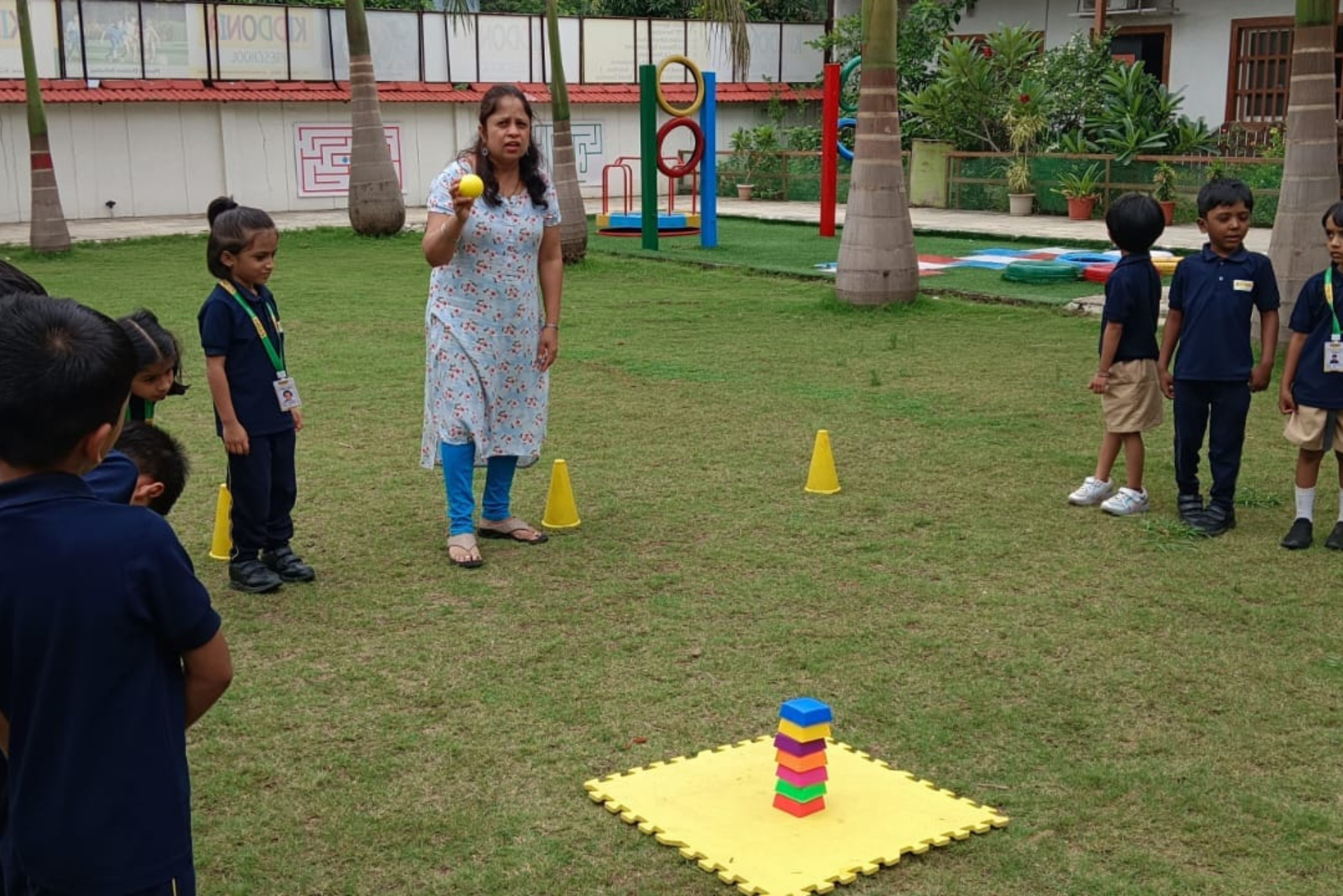
Discover the benefits of play-based learning in preschool and how it improves creativity, social skills, communication, problem-solving, and overall child development in early education. In recent years, the concept of play-based learning has gained significant attention in India’s education system. Moving away from traditional rote learning methods, educators and parents are now recognizing the value of learning through play—especially in early childhood.
Play-based learning is not just about fun and games; it is a powerful educational approach that supports a child’s overall development—intellectually, socially, emotionally, and physically.
Table of Contents
In this blog, we will explore the benefits of play-based learning in India, why it is becoming increasingly important, and how it helps children build a strong foundation for the future.
What is Play-Based Learning?
Play-based learning is an approach where children learn through activities, exploration, and play rather than formal instruction. It allows children to engage in hands-on experiences that promote curiosity, creativity, and independent thinking.
Examples of Play-Based Activities:
- Role-playing and pretend play
- Building with blocks
- Art and craft
- Storytelling and music
- Outdoor games and exploration
These activities are carefully designed to teach concepts in a natural and enjoyable way.
Growing Importance of Play-Based Learning in India
India’s education system has traditionally focused on memorization and exams. However, with changing times and global influence, there is a shift toward child-centered learning approaches.
The introduction of the National Education Policy (NEP) 2020 has further emphasized the following:
- Experiential learning
- Activity-based teaching
- Development of critical thinking
This has made play-based learning a key component of early education in India.
10 Key Benefits of Play-Based Learning
1. Enhances Cognitive Development
Play-based activities encourage children to think, explore, and solve problems.
- Improves memory and attention
- Develops reasoning skills
- Encourages curiosity
Children learn concepts more effectively when they discover them through play.
2. Builds Social Skills
When children play together, they learn how to interact with others.
- Sharing and cooperation
- Teamwork and communication
- Understanding social rules
These skills are essential for building healthy relationships.
3. Supports Emotional Development
Play helps children express their feelings and manage emotions.
- Builds confidence and self-esteem
- Teaches emotional regulation
- Reduces anxiety and stress
Children feel safe and happy when learning is enjoyable.
4. Improves Language and Communication Skills
Through storytelling, role-play, and group activities, children develop strong language skills.
- Expands vocabulary
- Enhances listening and speaking abilities
- Encourages expression
This prepares them for effective communication in school and beyond.
5. Encourages Creativity and Imagination
Play allows children to think freely and creatively.
- Develops imagination
- Encourages innovation
- Promotes independent thinking
Creative thinking is a valuable skill in today’s world.
6. Develops Physical Skills
Both indoor and outdoor play contribute to physical development.
- Improves motor skills
- Enhances coordination and balance
- Promotes overall health and fitness
Active play keeps children physically strong and energetic.
7. Builds Problem-Solving Skills
Play-based learning often involves challenges that require children to think and find solutions.
- Encourages logical thinking
- Develops decision-making abilities
- Promotes perseverance
Children learn to approach problems with confidence.
8. Makes Learning Enjoyable
One of the biggest advantages of play-based learning is that it makes education fun.
- Reduces fear of learning
- Increases engagement
- Builds a positive attitude toward school
When children enjoy learning, they are more motivated to participate.
9. Promotes Independence
Play-based environments allow children to make choices and explore on their own.
- Builds self-confidence
- Encourages responsibility
- Develops decision-making skills
Children become more independent learners.
10. Prepares Children for Future Learning
Play-based learning lays a strong foundation for academic success.
- Improves readiness for formal schooling
- Develops essential life skills
- Encourages lifelong learning
Children who learn through play adapt better to structured education later.
Play-Based Learning vs Traditional Learning
| Aspect | Play-Based Learning | Traditional Learning |
| Approach | Child-centered | Teacher-centered |
| Method | Learning through play | Rote memorization |
| Focus | Holistic development | Academic performance |
| Engagement | High | Often limited |
| Outcome | Creative and confident learners | Exam-focused learners |
Role of Teachers and Parents
Teachers:
- Act as facilitators rather than instructors
- Create engaging and interactive environments
- Encourage exploration and creativity
Parents:
- Support play at home
- Provide safe and stimulating environments
- Avoid excessive academic pressure
Together, they can create a balanced learning experience for children.
Challenges in India
Despite its benefits, play-based learning faces some challenges:
- Lack of awareness among parents
- Preference for traditional methods
- Limited resources in some schools
- Pressure for early academic achievement
However, awareness is gradually increasing, and more schools are adopting this approach.
Tips to Encourage Play-Based Learning at Home
- Provide toys that promote creativity (blocks, puzzles, art supplies)
- Allow free playtime without strict rules
- Engage in storytelling and role-play
- Encourage outdoor activities
- Limit screen time
Simple changes at home can make a big difference.
Conclusion
Play-based learning is transforming early education in India by making learning more engaging, meaningful, and effective. It focuses on nurturing the whole child, not just academic skills.
With the support of policies like NEP 2020 and growing awareness among parents and educators, play-based learning is becoming an essential part of modern education in India.
By embracing this approach, we can help children become confident, creative, and capable individuals, ready to face the challenges of the future.