Discover the best preschool activities that support child brain development through fun, creativity, and early learning. Improve memory, motor skills, language, and problem-solving abilities in young children.
Parents often wonder what really helps a child’s brain grow during the preschool years. Is it flashcards? Educational apps? Fancy toys? The truth is much simpler. Young children learn best through play, movement, conversation, imagination, music, and hands-on exploration. A child’s brain develops rapidly between the ages of 2 and 6, and every small activity during this stage shapes memory, creativity, emotional control, language, and problem-solving skills. Child Brain Development.
Table of Contents
Parents searching for preschool brain activities, free brain development activities for 5-year-olds, or children’s brain development activities often feel overwhelmed by endless online suggestions. The good news is that effective learning activities do not need expensive materials or complicated lesson plans. Many of the best preschool brain activities can happen at home using paper, blocks, music, water, colors, books, or nature. Schools like Kiddonia Preschool focus on activity-based learning because children absorb knowledge naturally when they are emotionally engaged and physically active. Preschool education today is shifting away from rote memorization and moving toward interactive learning experiences that develop the whole child.
Why Early Child Brain Development Matters
The First Five Years Shape Learning Ability
A child’s brain grows faster during the preschool years than at almost any other stage of life. Scientists often describe the brain during early childhood as a sponge because it absorbs experiences constantly. Every sound, interaction, movement, story, and emotional experience helps shape neural pathways that influence future learning and behavior.
Think about how quickly preschoolers learn language. A three-year-old can go from speaking simple words to creating complete conversations within months. That kind of rapid development happens because the brain is forming millions of connections every second during early childhood. These connections become stronger through repetition, positive interaction, and meaningful activities.
This is why children’s brain development activities are so important. Activities are not just meant to “keep children busy.” They build memory, focus, communication skills, emotional intelligence, and creativity. Even simple tasks like stacking blocks or singing nursery rhymes activate multiple areas of the brain at the same time (Child Brain Development).
Research also shows that emotional safety plays a huge role in learning. Children learn best when they feel secure, encouraged, and curious. A warm preschool environment filled with playful learning opportunities creates the perfect atmosphere for healthy brain growth Child Brain Development .
How Play Strengthens Neural Connections
Play is often misunderstood by adults. Many parents worry that children are “just playing” instead of learning. In reality, play is the engine that drives early childhood development. Through play, children experiment, solve problems, communicate, negotiate, imagine, and explore the world around them.
When children build towers using blocks, their brains are working on balance, planning, motor coordination, and spatial awareness. During pretend kitchen games, they develop language, social understanding, sequencing, and imagination. Outdoor games improve both physical health and cognitive flexibility Child Brain Development .
A 2025 study found that even 12 minutes of cognitively engaging physical activity improved working memory and executive functioning in preschool children. That is remarkable because it shows how quickly playful movement can positively influence the brain.
Play also teaches resilience. When children try, fail, and try again during games or activities, they develop problem-solving abilities and emotional control. These experiences build confidence and independent thinking that later support academic success in school.
The Science Behind Preschool Brain Activities
Executive Function and Cognitive Growth
Executive function sounds like a complicated scientific term, but it simply refers to the brain skills that help children focus, remember instructions, manage emotions, and control impulses. These skills are essential for success in both school and life.
Preschool activities that involve movement, memory, sequencing, and decision-making strengthen executive function naturally. Games like “Simon Says,” obstacle courses, matching cards, and storytelling activities help children practice attention control and flexible thinking.
Studies published in 2025 showed that structured motor learning activities significantly improved executive functioning in preschool-aged children. Activities combining movement with thinking tasks appear especially beneficial because they activate multiple brain regions simultaneously.
Children are not designed to sit still for long periods memorizing information. Their brains learn best through active participation. This is why modern preschool programs emphasize hands-on learning rather than passive instruction. Child Brain Development.
Research Supporting Child Brain Development Active Learning
Current research strongly supports active, play-based preschool learning environments. Nature-based education programs, dance activities, physical movement, and sensory learning all show measurable benefits for cognitive development.
One interesting study compared children during book reading versus screen-based storytelling. Researchers found that children’s brains responded differently during live reading experiences, suggesting stronger engagement and language processing during traditional reading activities.
This does not mean technology is always harmful. It simply highlights that real-world interaction remains incredibly valuable for young children. Face-to-face communication, touch, movement, and imagination activate brain development in ways screens often cannot fully replace.
The biggest takeaway from modern research is simple: children learn deeply when activities combine movement, creativity, social interaction, and curiosity.
Sensory Activities for Child Brain Development
Water Play and Texture Exploration
Sensory play is one of the most effective forms of preschool brain activities because it stimulates multiple senses simultaneously. Young children naturally explore the world through touch, sound, smell, movement, and visual experiences.
Water play is especially powerful for cognitive development. Pouring water between containers teaches measurement concepts, hand-eye coordination, concentration, and cause-and-effect thinking. Children become little scientists during these moments, even if they do not realize it.
Texture exploration activities using rice, foam, sand, cotton, pasta, or sponges help develop sensory processing abilities. These experiences strengthen fine motor skills and help children become more comfortable with different sensations. Sensory confidence is important because children who explore freely often become more curious and adaptable learners.
Simple sensory activities also improve vocabulary. While playing, children learn words like soft, rough, heavy, light, smooth, sticky, warm, and cold. Language development happens naturally when children interact with rich sensory experiences.
Sand, Clay, and Sensory Bins
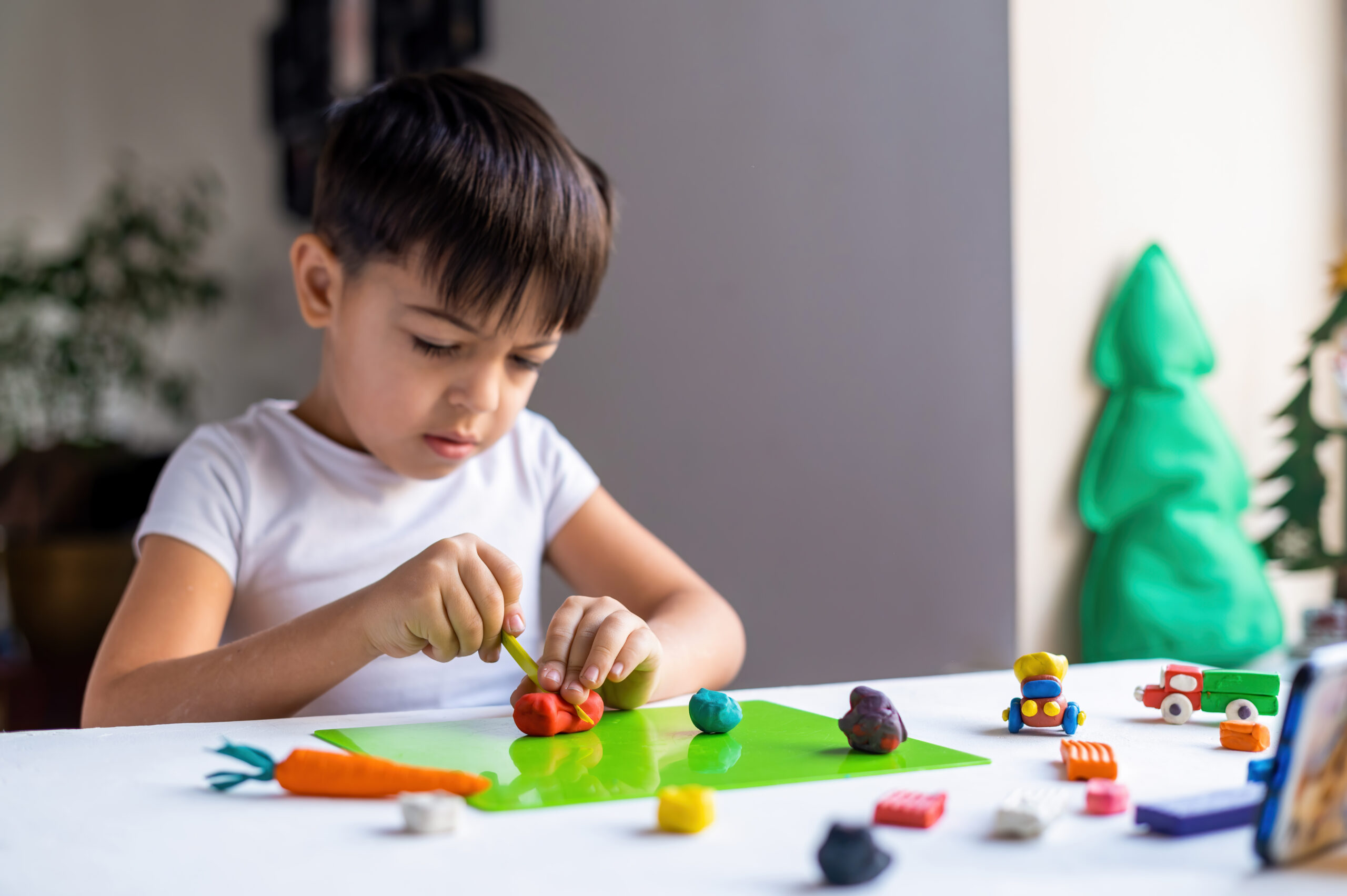
Clay modeling and sand play offer excellent opportunities for creativity and brain stimulation. Squeezing, rolling, shaping, and molding strengthen hand muscles needed later for writing. These activities also encourage planning, imagination, and concentration.
Sensory bins filled with colorful objects can become mini learning worlds. Children can sort objects by color, size, shape, or texture while improving classification skills. Parents often underestimate how much learning happens during these quiet moments of exploration.
The beauty of sensory learning is that it works for almost every age group. Whether you are looking for Child brain development activities for nursery class or activities for older preschoolers, sensory play remains highly effective and inexpensive.
Language and Communication Activities
Storytelling and Read-Aloud Sessions
Reading aloud remains one of the strongest tools for brain development during early childhood. Stories expose children to new vocabulary, emotions, ideas, and problem-solving situations. They also strengthen listening skills and imagination.
Children who are regularly read to often develop stronger communication abilities and better comprehension skills later in school. Storytelling also creates emotional bonding between children and caregivers, which supports emotional security and confidence.
Interactive storytelling works even better. Ask children questions during stories. Encourage predictions. Let them imagine alternate endings. This transforms reading into an active thinking exercise rather than passive listening.
Books also improve attention span. Preschoolers gradually learn to focus longer, follow sequences, and understand narratives through repeated reading experiences.
Rhymes, Songs, and Conversation Games
Songs and rhymes may seem simple, but they play a huge role in language development. Rhyming patterns strengthen phonological awareness, which later supports reading skills.
Conversation games are equally important. Asking open-ended questions encourages children to think critically and express ideas clearly. Questions like “What do you think will happen next?” or “Why did the character feel sad?” develop reasoning and emotional understanding.
Even everyday conversations during meals, walks, or shopping trips contribute to brain growth. Language-rich environments help children build stronger communication networks inside the brain.
Creative Activities That Boost Brain Power Child Brain Development
Art and Drawing Activities
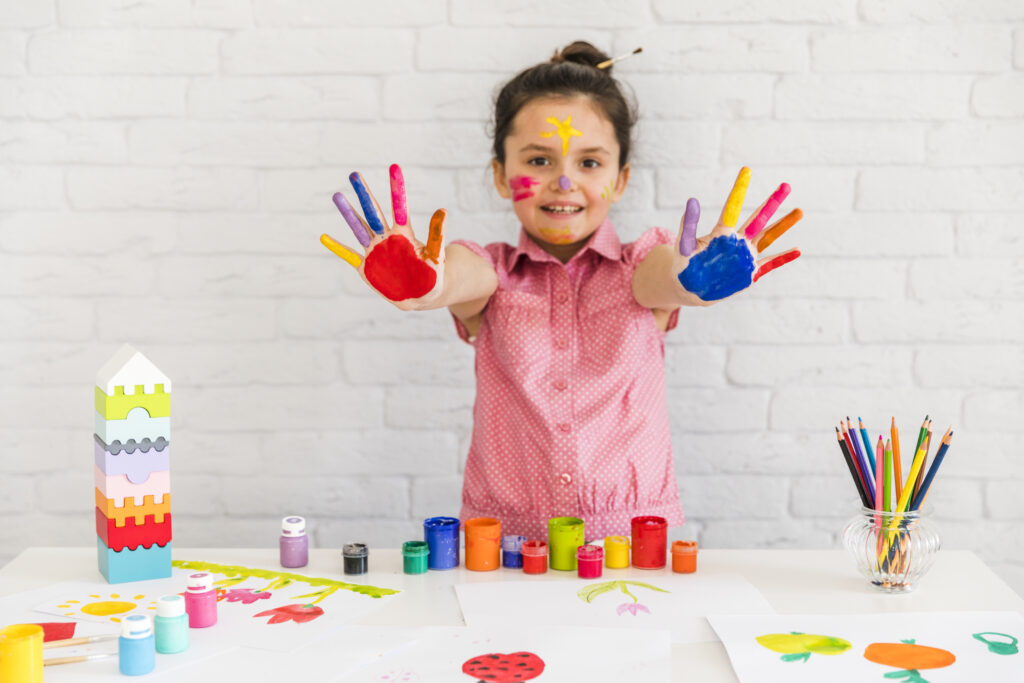
Art activities support far more than creativity. Drawing, painting, cutting, and coloring improve hand coordination, concentration, and visual processing skills. Art also allows children to express emotions before they fully understand how to communicate feelings verbally.
Creative freedom is especially important. Instead of focusing only on perfect outcomes, adults should encourage experimentation. A child painting purple trees or orange clouds is exploring imagination, not making mistakes.
Art also builds confidence. When children create something independently, they develop pride in their abilities. This emotional growth directly influences learning motivation and resilience Child Brain Development.
Pretend Play and Role-Playing Child Brain Development
Pretend play is like a workout for the developing brain. Children acting as doctors, teachers, chefs, or astronauts practice memory, planning, empathy, and communication simultaneously.
Role play helps children understand social situations and emotional responses. They learn cooperation, negotiation, and problem-solving through imaginative scenarios. This type of learning cannot easily be replicated through worksheets or passive instruction.
Pretend play also improves executive functioning because children must follow imaginary rules, stay in character, and adapt storylines creatively.
Physical Activities That Improve Brain Function
Dance and Movement Games
Movement is deeply connected to brain development. Activities involving balance, rhythm, coordination, and movement improve cognitive flexibility and attention.
A 2025 randomized trial found that dance-based preschool activities improved executive functioning in children aged 4 to 6. Dance combines physical movement with memory, rhythm, listening, and sequencing, making it a powerful learning activity.
Movement games like hopping, jumping, crawling, and balancing also strengthen spatial awareness and body control. These activities stimulate both physical and cognitive growth at the same time.
Outdoor Nature Exploration
Nature offers one of the richest learning environments for preschoolers. Outdoor exploration activates curiosity naturally. Children observe insects, leaves, rocks, weather changes, and sounds while asking endless questions about the world around them.
Research on nature-based preschool education found improvements in literacy and executive functioning skills among preschoolers participating in outdoor learning experiences.
Nature walks, scavenger hunts, gardening, and outdoor obstacle courses encourage observation, movement, creativity, and emotional calmness. Outdoor play also reduces stress and supports healthier sleep patterns, both of which influence brain development positively.
Problem-Solving Activities for Preschoolers
Puzzles and Building Blocks
Puzzles teach patience, concentration, and logical thinking. Children learn how pieces fit together while strengthening visual-spatial reasoning skills.
Building blocks are equally valuable because they encourage experimentation and engineering thinking. Children naturally learn concepts like balance, structure, symmetry, and gravity while building towers or bridges.
These activities also promote perseverance. Children often fail several times before achieving success, which builds resilience and problem-solving confidence.
Sorting and Matching Games
Sorting objects by color, shape, size, or texture develops classification skills and attention to detail. Matching games strengthen memory and visual recognition abilities.
These activities can be created easily at home using everyday items. Buttons, toys, cups, leaves, or kitchen objects can become educational tools without spending money.
Parents looking for free brain development activities for 5-year-olds often overlook how effective simple home-based games can be.
Free Brain Development Activities for 5 Year Olds
Everyday Home-Based Learning Ideas
Many powerful learning activities happen naturally during daily routines. Cooking teaches counting, sequencing, measurement, and sensory exploration. Grocery shopping introduces categorization and communication skills. Gardening encourages observation and patience.
Children do not need expensive educational kits to learn effectively. Consistency, interaction, and engagement matter far more than fancy materials.
Screen-Free Educational Activities
Modern parents often struggle with screen time management. While some educational content may be useful, research continues to show that real-world experiences remain more beneficial for preschool brain development.
Screen-free activities encourage imagination, conversation, movement, and emotional interaction. These experiences build stronger social and cognitive skills compared to passive entertainment.
Some excellent screen-free ideas include:
- Puppet storytelling
- Treasure hunts
- Music and dance sessions
- DIY obstacle courses
- Clay modeling
- Gardening
- Flashlight shadow games
- Alphabet treasure hunts
The best activities are usually the ones where children actively participate rather than simply watch.
Choosing the Right Preschool Environment
What Parents Should Look For
A preschool environment should feel warm, engaging, and child-centered. Parents should look for schools that encourage exploration, creativity, communication, and active learning instead of excessive academic pressure.
The best preschools understand that emotional well-being and curiosity are deeply connected to learning success. Programs that include sensory learning, outdoor play, storytelling, music, movement, and collaborative activities create stronger foundations for lifelong development.
Schools like to emphasize interactive learning experiences that nurture creativity, confidence, communication, and cognitive growth together. A balanced preschool environment helps children develop not just academically but emotionally and socially as well.
Parents should also observe how teachers interact with children. Positive communication, encouragement, and patience matter enormously during early childhood education.
Conclusion
Child brain development does not happen through pressure or memorization alone. It grows through play, movement, imagination, conversation, creativity, and emotional connection. Preschool activities that combine these elements help children build stronger cognitive skills, emotional intelligence, communication abilities, and confidence.
The most effective preschool brain activities are often the simplest ones. Reading stories, dancing, building blocks, sensory play, outdoor exploration, and pretend games all support healthy neural development during the critical early years.
Parents do not need perfect schedules or expensive educational products. What children truly need is meaningful interaction, encouragement, and opportunities to explore the world around them with curiosity and joy. Those small everyday moments often become the building blocks for lifelong learning.
FAQs
1. What are the best preschool activities for brain development?
Activities involving storytelling, sensory play, dance, puzzles, pretend play, and outdoor exploration are highly effective because they stimulate multiple areas of the brain simultaneously.
2. Are free brain development activities for 5-year-olds effective?
Yes. Many free activities like reading, sorting games, nature walks, singing, and building with household objects provide excellent cognitive stimulation without requiring expensive materials.
3. How does sensory play help preschool children?
Sensory play improves fine motor skills, focus, language development, problem-solving abilities, and sensory processing by engaging multiple senses at once.
4. Can physical activities improve brain function in preschoolers?
Yes. Research shows that movement-based activities like dancing, jumping, and coordinated games improve executive functioning, memory, and attention in preschool children.
5. Why is pretend play important for brain development?
Pretend play strengthens imagination, emotional understanding, communication skills, planning abilities, and social interaction, all of which are essential for healthy cognitive growth.